Flush Sash Windows Enfield – Supply & Installation
Flush sash windows take their design from traditional timber joinery that was common in British properties before the 1930s.
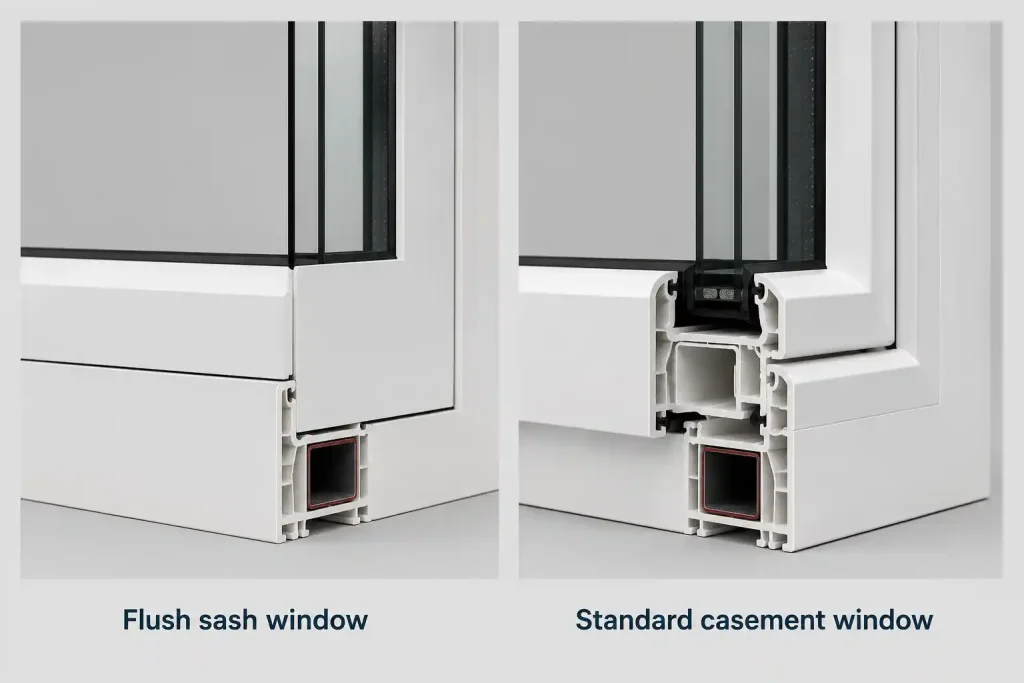
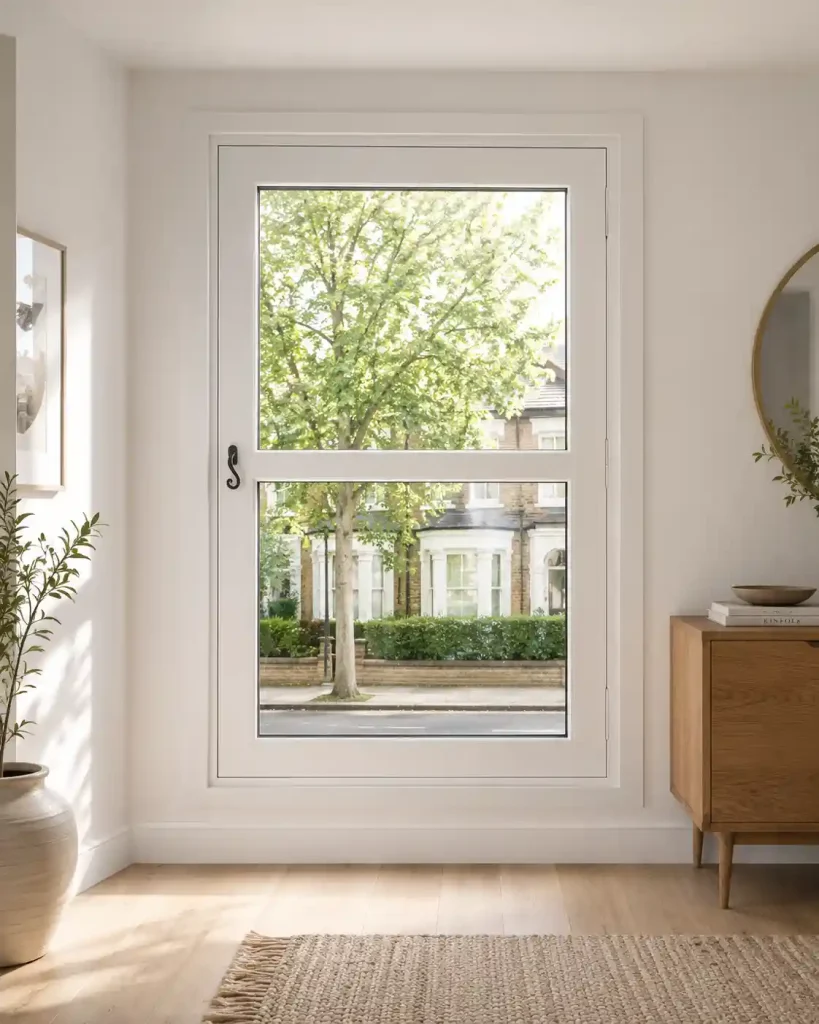
Unlike standard casement windows where the sash overlaps the outer frame when closed, a flush sash window sits completely level with the surrounding frame, creating a smooth, uninterrupted appearance that closely replicates the look of original pre-1932 timber windows.
At Urgent Windows, we supply and install flush sash windows across Enfield, covering EN1, EN2, and EN3. Whether you are replacing windows on a period property in Bush Hill Park, upgrading a Victorian terrace in Enfield Town, or looking for a heritage-appropriate window for a property in a conservation area, flush sash windows offer the traditional appearance of original timber with the performance, security, and low maintenance of modern materials.
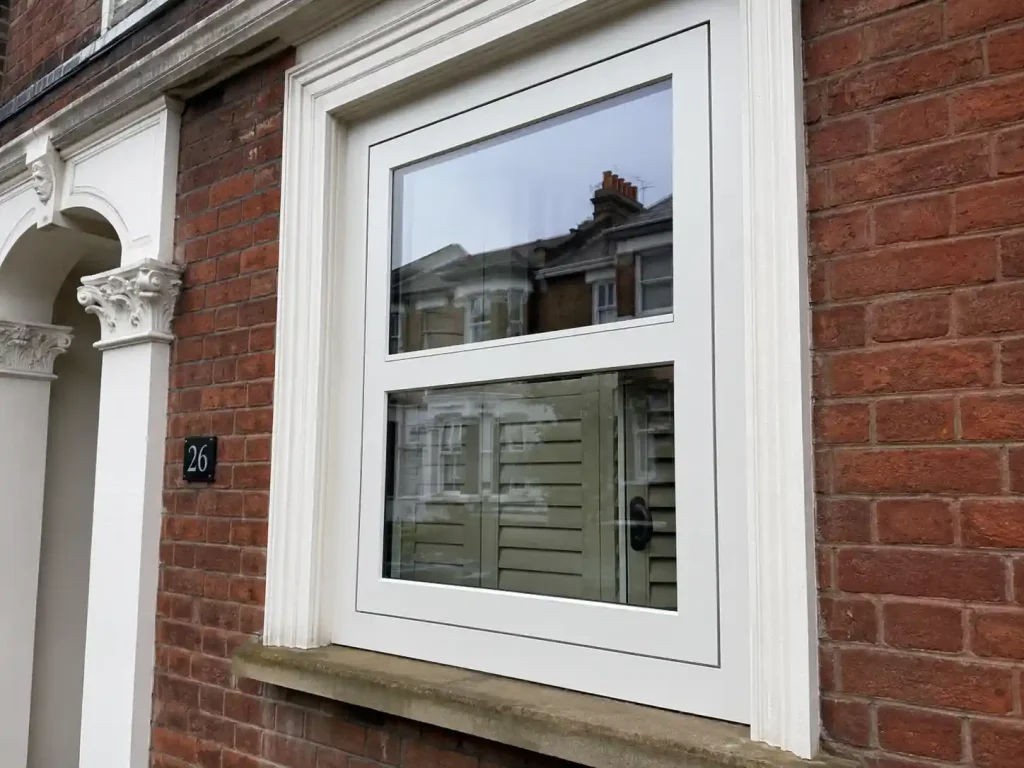
We offer flush sash windows in both uPVC and aluminium, made to measure for your property, with a wide range of heritage colours, woodgrain finishes, and hardware options to suit the character of your home.
What are flush sash windows?
Flush sash windows are a hinged window style, typically side-hung or top-hung, where the opening sash sits completely flush with the outer frame when closed.
There is no external overlap between the sash and the frame, which is what distinguishes them visually from a standard casement window and gives them their characteristic clean, flat appearance.
This design replicates the construction of traditional timber windows made before the 1930s, when joinery techniques produced windows where the sash and frame met in a single flat plane rather than overlapping.
The result was a window that looked integral to the wall rather than sitting proud of it, and it is this quality that makes flush sash windows the most architecturally sympathetic replacement option for period properties across Enfield.
Flush inside and out
Modern flush sash windows offer the flush appearance on both faces of the window, not just the exterior. On the outside, the flush finish maintains the period character of the building and satisfies conservation area requirements where the original window profile must be respected.
On the inside, the sash sits level with the surrounding wall and window trim, creating clean uninterrupted sightlines that suit both traditional interiors and modern minimalist design equally well.
Mechanical jointing
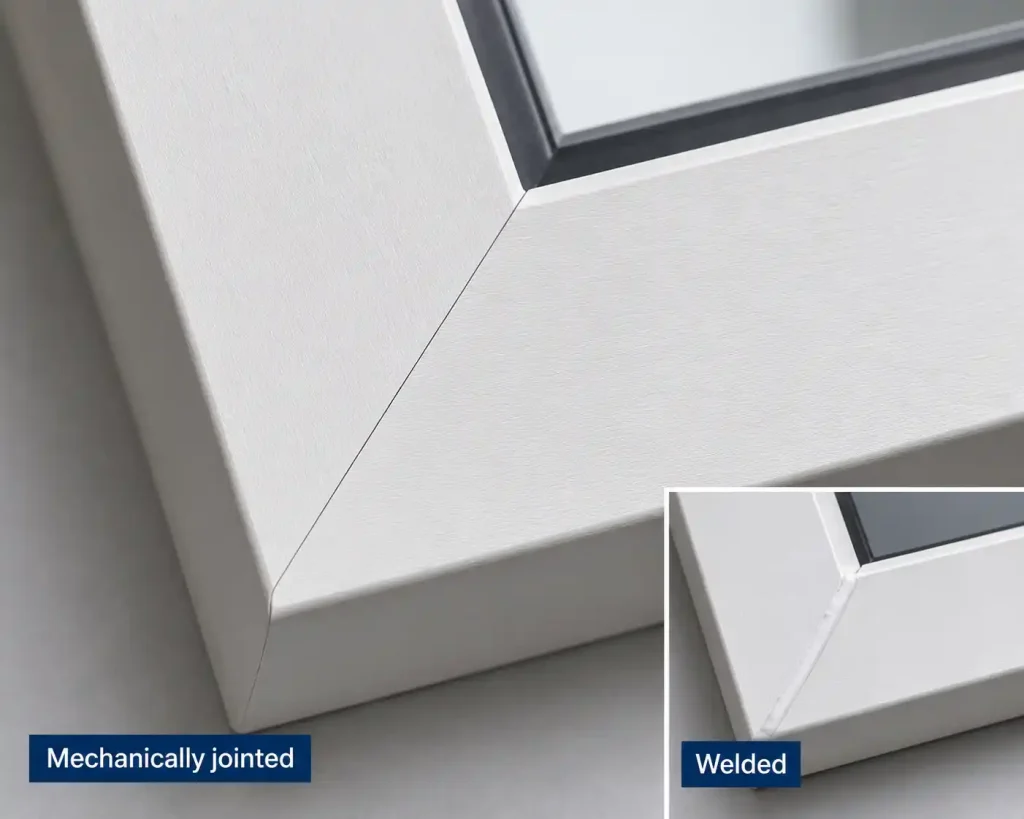
Standard uPVC windows use welded corners, where the frame sections are heat-fused together leaving a visible weld line at each corner.
Flush sash windows can be manufactured with mechanically jointed corners instead, where the frame sections are connected using a mechanical fixing rather than welding.
This produces a crisp, square corner that closely replicates the mortise and tenon joinery of original timber windows and is visually indistinguishable from real timber at close range.
For period properties and conservation area installations in Enfield, mechanically jointed flush sash windows are the most authentic option available in modern materials.
Flush sash vs casement vs sliding sash, which should you choose?
If you are replacing windows on a period property in Enfield and are weighing up your options, the choice between flush sash, standard casement, and sliding sash windows comes down to three things, the architectural character of your property, the planning requirements of your location, and your personal preference for how the window operates.
Flush sash windows
Flush sash windows are the right choice when the appearance of the window matters as much as its performance. The flat, flush frame replicates pre-1932 timber joinery more closely than any other modern window style, making them the most sympathetic replacement for original windows on Victorian, Edwardian, and interwar properties.
They open on side or top hinges like a casement window, so the operation is familiar and straightforward.
If your property is in a conservation area or you simply want the most authentic-looking replacement available, flush sash is the appropriate choice.
Standard casement windows
Standard casement windows use the same hinged opening mechanism as flush sash windows but the sash overlaps the outer frame when closed, creating a visible stepped profile on the exterior.
This is the most widely installed window style in the UK and suits the majority of modern and post-war properties well.
For period properties where the original windows had a flush timber appearance, however, a standard casement is a visible compromise, and the overlap can look incongruous against traditional brickwork and period architectural details.
Sliding sash windows
Sliding sash windows use a vertical sliding mechanism rather than a hinged opening, and are most closely associated with Georgian, Victorian, and Edwardian terraced properties where the original windows were of this type.
If your property originally had sliding sash windows and you want to retain the vertical sliding operation as well as the period appearance, sliding sash is the appropriate replacement.
If the original windows were flush casements or the vertical sliding mechanism is not a priority, flush sash windows deliver an equally authentic appearance with the added practicality of a hinged opening.
A simple guide
Your property originally had flush timber casements and is in a conservation area, choose flush sash. Your property is a Victorian or Edwardian terrace with original sash windows, choose sliding sash.
Your property is modern or post-war and appearance is not a primary concern, choose standard casement. You want the most authentic period appearance with a hinged opening, choose flush sash.
Period properties and conservation areas in Enfield
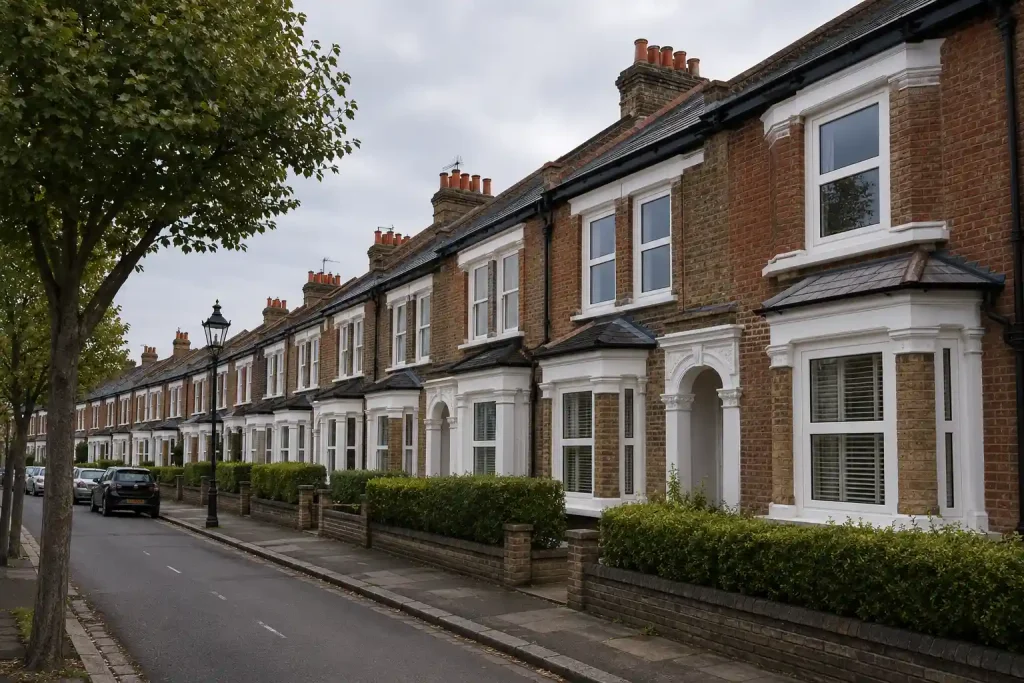
Enfield has a significant concentration of Victorian, Edwardian, and interwar properties where original windows were designed with a flush timber appearance.
The terraced streets of Bush Hill Park, the Edwardian avenues of Palmers Green and Winchmore Hill, the period properties around Enfield Town and Chase Side, and the interwar semis of Grange Park and Cockfosters all share architectural details that a flush sash window replicates more faithfully than any other modern window style.
Conservation areas
Several parts of Enfield are designated conservation areas where the appearance of replacement windows is subject to planning considerations. The Enfield Town conservation area, along with conservation designations in Winchmore Hill, Forty Hill, and Chase Side, require replacement windows to respect the character of the original building and the surrounding streetscape.
Flush sash windows, particularly those with mechanically jointed corners, woodgrain or heritage colour finishes, and authentic period hardware, are among the most conservation-friendly replacement options available in modern uPVC and aluminium.
For properties in Enfield’s conservation areas, the most commonly specified colours are heritage white, classic cream, and chartwell green, all of which reflect the painted timber finishes historically associated with period properties in North London.
Anthracite grey and black are increasingly acceptable on rear elevations and less sensitive positions, but white and cream remain the standard for principal street-facing facades in conservation area contexts.
Planning considerations
If your property is in a conservation area, we recommend confirming with the London Borough of Enfield planning department whether prior approval is needed before proceeding.
As a FENSA-registered installer, we are familiar with Enfield’s conservation area requirements and will advise on appropriate specifications during the initial consultation, helping you avoid the frustration of ordering windows that subsequently require modification or planning consent.
For listed buildings where the original flush timber windows must be matched precisely in profile, proportion, and finish, we can advise on the most appropriate specification and, where necessary, assist with the information required for a listed building consent application.
Energy efficiency and thermal performance
Flush sash windows achieve strong thermal performance through the same combination of frame design, glazing specification, and sealing systems used across all modern window types, with one additional advantage specific to the flush design, the double rebated seal.
Multi-chamber frame and glazing
Modern uPVC flush sash frames use a multi-chamber profile construction where hollow sections within the frame trap air and create insulating barriers that slow heat transfer between the inside and outside of the window.
Combined with double glazing using argon gas filling and low-emissivity glass, flush sash windows achieve a Window Energy Rating of A+ and a whole window U-value of 0.87 W/m²K with a standard double-glazed unit.
Triple glazing reduces this further to 0.79 W/m²K, making it one of the best performing window specifications available for residential properties.
For context, an original single-glazed timber window typically has a U-value of around 5.0 W/m²K, meaning it loses heat approximately six times faster than a modern double-glazed flush sash window. The improvement after replacement is immediately noticeable in rooms that previously had cold spots near the windows during winter.
The double rebated seal
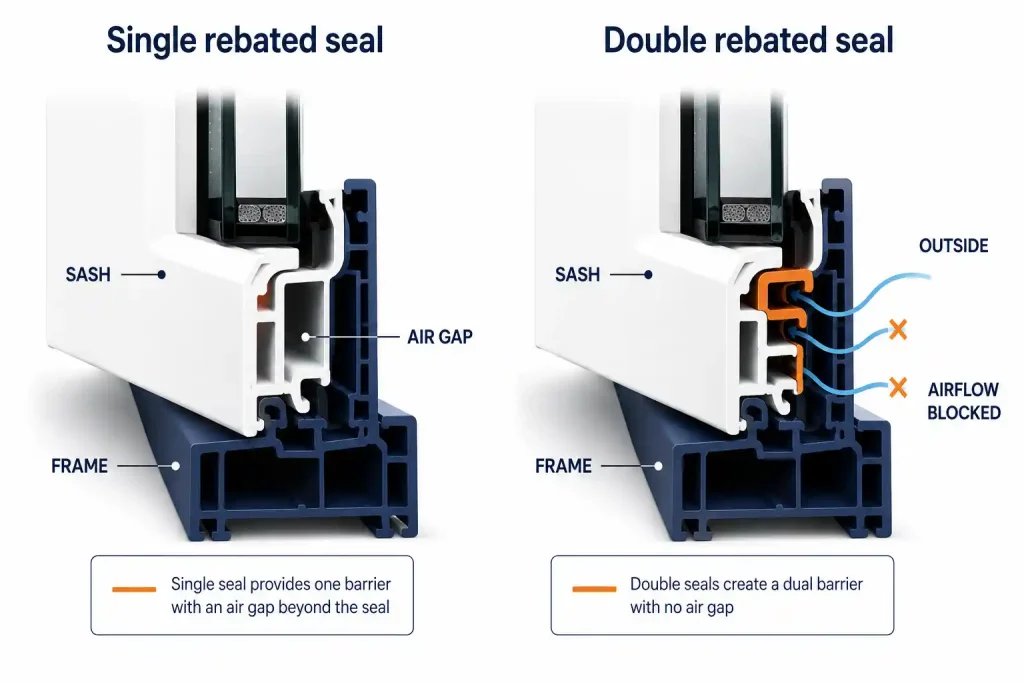
Standard flush sash windows use a single rebated seal, where one seal runs around the perimeter of the sash to close the gap between the sash and the frame. Modern flush sash profiles use a double rebated seal instead, where two overlapping seals create a dual barrier between the sash and the frame. The difference matters in two ways.
First, weather resistance is significantly improved. The double barrier prevents wind-driven rain and draughts from penetrating the seal even under the variable weather conditions common in North London, where a single seal system can allow air infiltration over time as the seal compresses with use.
Second, thermal performance improves because the double seal creates an additional air pocket between the two sealing surfaces, adding a further layer of insulation between the inside and outside of the window that a single seal cannot provide.
Triple glazing
Triple glazing adds a third pane of glass to the unit, further reducing heat loss and improving acoustic performance. For properties on or near busy roads in Enfield, or those seeking the maximum available thermal performance, triple glazing with a double rebated seal represents the best combination of insulation and weather resistance currently available in a flush sash window.
All our flush sash window installations comply with Approved Document L of the Building Regulations, which sets the minimum energy performance standards for replacement windows in England.
Security
The flush appearance of a flush sash window might suggest a simpler or less robust construction than a standard casement, but this is not the case. Modern flush sash windows are engineered to the same security standards as any other window type and incorporate several features specifically designed to resist forced entry.
Multi-point locking
When closed, flush sash windows lock at multiple points around the frame simultaneously using a multi-point locking system.
Rather than a single central latch, the locking mechanism engages at the top, bottom, and sides of the sash, distributing resistance across the full perimeter of the frame and making forced entry significantly more difficult.
The locking points are concealed within the frame, consistent with the clean external appearance of the flush design.
PAS24 security standard
Our flush sash windows meet the requirements of PAS24, the British Standard for enhanced security performance in windows and doors.
PAS24 certification requires the window to pass a series of tests simulating different methods of forced entry, including manipulation of the locking mechanism, attack on the glazing, and attempts to lever the sash from the frame.
Meeting this standard provides independent verification that the window performs to a recognised security benchmark rather than relying solely on the manufacturer’s claims.
Anti-lifting blocks and hinge protectors
Flush sash windows include anti-lifting blocks within the frame that prevent the sash from being lifted out of the frame from outside even if the locking mechanism is compromised.
Hinge protectors add further resistance at the hinge side of the sash, which is typically the most vulnerable point on a side-hung window. Together these features address the main methods used in opportunistic window attacks on residential properties.
Concealed hinges
The hinges on flush sash windows are concealed within the frame rather than visible on the external face of the window. This removes a potential point of attack from the exterior and contributes to the clean uninterrupted appearance of the flush design, maintaining both security and aesthetics simultaneously.
For homeowners in Enfield replacing original single-latch timber windows, the improvement in security from modern flush sash windows with PAS24 certification and multi-point locking is substantial and immediate.
Acoustic performance
Flush sash windows provide meaningful noise reduction compared to the original single-glazed timber windows they typically replace, and the combination of double glazing and the double rebated seal gives them a measurable acoustic advantage over older window designs.
Modern flush sash windows achieve an acoustic rating of 37dB with a standard double-glazed unit, a figure that represents a noticeable reduction in external noise for most residential environments.
The double rebated seal contributes to this performance by eliminating the gaps and compression failures that allow sound to pass directly through the frame junction regardless of the glazing specification.
A window with a tight, consistent seal performs significantly better acoustically than one where the seal has worn or where gaps exist between the sash and the frame, which is the situation with most original timber windows in Enfield’s period properties.
For homeowners on or near the A10 Hertford Road, the A1010, or the residential streets close to Enfield Town station and Enfield Chase station, the acoustic improvement from replacing original single-glazed windows with modern double-glazed flush sash units is one of the most immediately noticeable benefits after installation.
For properties with particularly high levels of external noise, acoustic glass and triple glazing are available as upgrades that provide greater noise reduction than standard double glazing alone. Our sliding sash windows Enfield page covers the acoustic options in more detail for homeowners whose primary concern is noise reduction.
Low maintenance
One of the most practical advantages of modern flush sash windows is how little attention they require once installed. For homeowners in Enfield who have been maintaining original timber windows, the contrast is immediate and significant.
uPVC flush sash windows
uPVC frames do not rot, warp, crack, or require painting at any point during their lifespan. The colour runs consistently through the material rather than being applied as a surface coating, so minor surface marks do not reveal a different colour underneath.
Woodgrain foil finishes are applied to the outer surface of the frame and are designed to retain their appearance over the lifetime of the window without fading, peeling, or requiring re-treatment.
Cleaning is straightforward, an occasional wipe-down with a damp cloth and mild detergent is all that is needed to keep the frames looking as they did on installation day.
Aluminium flush sash windows
Aluminium frames are equally low maintenance. The powder-coated finish is highly resistant to fading, chipping, and corrosion, and retains its colour and appearance reliably over the 30 to 40 year lifespan of the frame.
Like uPVC, aluminium does not warp or swell with changes in temperature and humidity, meaning the sash continues to operate smoothly and close cleanly throughout the life of the window without the seasonal sticking and binding that affects original timber frames.
Hardware
The handles, locking points, and hinges benefit from an occasional check and light lubrication once a year to keep the mechanism running cleanly. This takes a few minutes and requires no specialist tools or knowledge.
Beyond this, there is nothing a homeowner needs to do to keep a modern flush sash window in good working order under normal operating conditions.
Colours, finishes, and hardware
The colour and finish of a flush sash window has a greater impact on how a period property looks than almost any other specification choice.
Because the flush design draws attention to the window as a flat, integral part of the wall rather than a frame sitting proud of it, the colour needs to work with the surrounding brickwork, render, and architectural details rather than against them.
Frame colours
Flush sash windows are available in a wide range of colours and finishes. The most commonly specified options for Enfield’s period properties are,
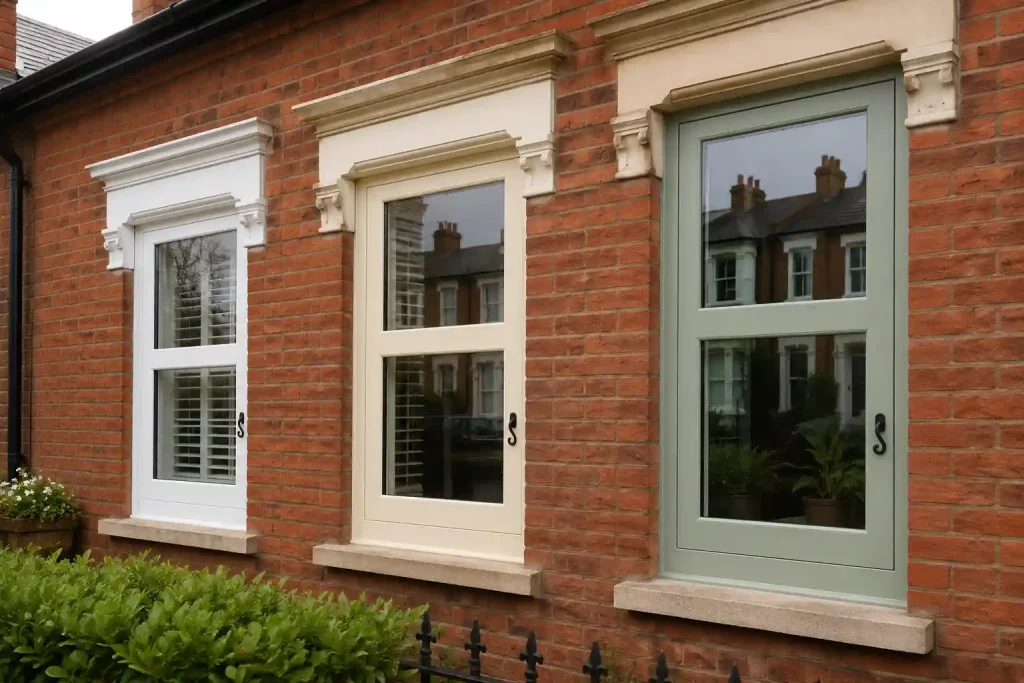
Heritage white, the closest match to traditional painted timber and the most widely used colour for flush sash windows on Victorian and Edwardian properties. Clean, neutral, and appropriate for virtually any period property streetscape.
Classic cream, a softer, warmer alternative to white that suits properties with golden or buff brick tones, common across many of Enfield’s Edwardian streets. Particularly well suited to conservation area installations where a slightly less stark finish is preferred.
Chartwell green, a soft sage green associated with mid-twentieth century painted joinery and increasingly popular for period properties in conservation areas. Works well on both brick and rendered facades and is one of the most characterful heritage colour options available.
Anthracite grey, a dark contemporary finish that has grown significantly in popularity over recent years. Appropriate for rear elevations and less sensitive positions, and increasingly accepted in conservation areas where the principal facade is treated more traditionally.
Black ash, a deep near-black finish that creates a strong visual contrast against light brickwork. Popular on contemporary extensions and rear additions where a bold, modern aesthetic is desired alongside the flush sash profile.
Woodgrain foil finishes including golden oak, Irish oak, and rosewood, applied to the outer face of the uPVC frame to replicate the warmth and texture of natural timber. Available with a smooth white or complementary woodgrain finish on the interior face independently, allowing the interior and exterior to be specified differently if preferred.
Hardware and ironmongery
The hardware on a flush sash window is one of the details that most affects how authentic it looks on a period property. Options include,
Monkey tail handle, a curved, sweeping handle design closely associated with traditional timber casement windows and one of the most popular choices for flush sash installations on Victorian and Edwardian properties across Enfield. Available in antique black, hardex chrome, and hardex graphite finishes.
Teardrop handle, a more compact period-style handle with a distinctive teardrop profile. Suits properties where a subtler hardware choice is preferred while still maintaining a traditional character.
Connoisseur handle, a more architectural handle design suited to larger windows and contemporary interpretations of the flush sash style.
Peg stay, a traditional stay bar that holds the window open at a chosen position, replicating the operation of original timber casement stays and adding a further layer of period authenticity to the installation.
Hardware finishes available include antique black, hardex chrome, hardex graphite, and hardex gold, allowing the ironmongery to be matched to the interior fittings and the character of the property.
For conservation area properties in Enfield, antique black hardware in a monkey tail or teardrop style is generally the most sympathetic choice and the one most likely to satisfy planning requirements where the appearance of replacement window furniture is specified.
Cost guide, flush sash windows Enfield
The cost of flush sash windows in Enfield depends on the frame material, window size, glazing specification, colour, and whether mechanically jointed corners are specified rather than welded. The prices below are intended as a general guide to help you budget before requesting a quote.
uPVC flush sash windows, Enfield
- Single uPVC flush sash window, supply and install, £650 to £950
- Double uPVC flush sash window, supply and install, £950 to £1,300
- Larger or non-standard sizes, supply and install, £1,100 to £1,600
Supply only options are available, typically 30 to 40 percent less than the supply and install figures above.
Aluminium flush sash windows, Enfield
- Single aluminium flush sash window, supply and install, £950 to £1,300
- Double aluminium flush sash window, supply and install, £1,300 to £1,800
- Larger or non-standard sizes, supply and install, £1,500 to £2,100
Supply only options are available on aluminium flush sash windows for customers who prefer to arrange their own installation.
What affects the cost?
Several factors influence the final price beyond the base window specification,
Frame material, aluminium costs more than uPVC upfront but offers a longer lifespan, slimmer sightlines, and a more refined appearance for contemporary properties and extensions. For most period property replacements in Enfield, uPVC timber-alternative is the more cost effective choice without meaningful compromise on appearance.
Mechanical jointing, flush sash windows with mechanically jointed corners cost slightly more than welded equivalents due to the additional manufacturing process involved. For conservation area properties and period homes where the timber-authentic appearance is a priority, the additional cost is generally considered worthwhile.
Glazing specification, standard double glazing with argon gas and low-emissivity glass is included in the base price ranges above. Triple glazing and acoustic glass are available as upgrades and add to the cost depending on the size of the unit.
Colour and finish, standard white and cream finishes are included in the base price. Heritage colours including chartwell green and agate grey, woodgrain foils, and dual colour specifications where the interior and exterior are finished differently add a modest premium to the frame cost.
Window size and configuration, larger windows and non-standard shapes require more material and more involved installation. Bay window configurations and arched head windows add further complexity and cost.
Installation complexity, conservation area properties may require additional survey time to confirm specifications and assess planning requirements before installation proceeds. Properties with original frames in poor condition may require additional preparation work before the new window can be fitted.
Getting an accurate quote
The figures above give a useful starting point, but the most reliable way to get an accurate price is through a site survey. This allows us to assess the existing openings, take precise measurements, and recommend the most appropriate specification for your property and budget. We carry out surveys across all Enfield postcodes, EN1, EN2, and EN3, and can usually arrange a visit within a few days of your enquiry. All quotes are free and provided without obligation.
Installation process
We aim to keep the installation process as straightforward as possible, whether you are replacing a single window or upgrading an entire period property. Here is what to expect when you choose Urgent Windows for your flush sash window installation in Enfield.
Step 1, initial consultation
The process begins with a conversation about your requirements. We will discuss the property type, the window style and material that suits your home, colour and hardware preferences, and any specific considerations such as conservation area requirements or listed building status. This can be done over the phone, via WhatsApp, or in person during a site visit.
Step 2, survey and measurement
We carry out a detailed site survey at your property, taking precise measurements of each opening and assessing the condition of the existing frames and reveals. For conservation area properties, we will advise on appropriate specifications at this stage and flag any planning considerations before any commitment is made. We cover all Enfield postcodes, EN1, EN2, and EN3, and can usually arrange a survey within a few days of your initial enquiry.
Step 3, product selection and quote
Following the survey, we provide a clear itemised quote covering the windows specified during the consultation. We will confirm the frame material, colour, glazing specification, hardware choices, and whether mechanical jointing is appropriate for your property. There is no obligation to proceed and no pressure to decide on the day.
Step 4, manufacture and scheduling
Once you are happy to proceed, your windows are ordered to the precise measurements taken during the survey. Made-to-measure flush sash windows typically take three to four weeks to manufacture depending on the specification and colour. Heritage colours, woodgrain foils, and mechanically jointed frames may sit toward the longer end of this range. We will confirm the installation date in advance and keep you informed throughout.
Step 5, installation
Our own installation team carries out all work, we do not use subcontractors. A standard single room installation is typically completed within half a day, while a whole-house replacement on a period property is usually done within one to two days. We take particular care on period properties and conservation area installations to ensure the finished result meets the specifications agreed during the planning process and reflects the character of the surrounding architecture.
Step 6, final inspection and certification
On completion we carry out a full check of every window, testing the opening and closing operation, checking the locking mechanism at all points, and confirming that the seals and weather performance are correct. Any snagging is resolved before we leave. We then issue your FENSA certificate confirming that the installation complies with current building regulations, along with documentation for your workmanship and product guarantees.
Why choose a local Enfield installer?
Every competitor currently ranking for flush sash windows in Enfield is either a manufacturer, a national supplier, or a lead generation site. None of them will survey your property, advise on your specific conservation area requirements, or install your windows. Choosing a local installer who actually carries out the work makes a practical difference at every stage of the process.
Knowledge of Enfield’s period properties
Flush sash windows are most commonly installed on Victorian, Edwardian, and interwar properties, and Enfield has a significant concentration of exactly these property types. The terraced streets of Bush Hill Park, the Edwardian avenues of Palmers Green and Winchmore Hill, the period properties around Enfield Town and Chase Side, and the interwar semis of Grange Park and Cockfosters all present different construction details, reveal depths, and frame conditions that a local installer familiar with Enfield’s housing stock understands from experience.
Conservation area expertise
Several parts of Enfield are designated conservation areas where the specification of replacement windows matters beyond personal preference. A local installer with experience working in the Enfield Town conservation area, Winchmore Hill, and Forty Hill understands what specifications are appropriate, what the local planning authority is likely to accept, and how to advise you accurately before any windows are ordered. This avoids the frustration of ordering windows from a national supplier only to discover the colour, profile, or hardware does not meet local planning requirements.
Faster surveys and response times
Being based in Enfield means we can arrange surveys and installations more quickly than a company operating nationally. There are no lengthy waiting lists for a local visit, and if anything needs attention after installation, we are nearby and easy to reach. For landlords managing period properties across Enfield, this responsiveness is particularly valuable when window issues need to be resolved promptly between tenancies.
Accountability and local reputation
A local installer has a reputation to maintain in the specific area it serves. A significant proportion of our work in Enfield comes through recommendations from previous customers, neighbours, and local letting agents, which means our incentive to complete every job properly is direct and genuine. When you choose a local company rather than a national supplier, you are dealing with people who will still be working in your area long after your windows are installed.
Frequently asked questions
Get a free quote
If you are considering flush sash windows for a period property, conservation area home, or any property in Enfield where the appearance of the replacement window matters as much as its performance, we are happy to help you find the right specification for your situation.
Whether you are still deciding between flush sash, sliding sash, or standard casement windows, or you have a clear idea of what you want and need a survey and quote, our team can advise on conservation area requirements, appropriate colour and hardware choices, and the most suitable material and glazing specification for your property and budget.
We cover all Enfield postcodes, EN1, EN2, and EN3, as well as surrounding areas including Barnet, Southgate, Palmers Green, Winchmore Hill, Bush Hill Park, and Enfield Town. Surveys can usually be arranged within a few days of your initial enquiry.
Get in touch via the form below, by phone, or on WhatsApp, and we will get back to you promptly.