Sliding Sash Windows Enfield – Supply & Installation
Sliding sash windows are one of the most recognisable features of Victorian and Edwardian properties across Enfield. If you live in a period terrace in Bush Hill Park, a semi-detached in Palmers Green, or any property across EN1, EN2, or EN3 where the original timber sash windows are draughty, rattling, or simply beyond repair, modern replacements offer all the traditional character with significantly better performance.
At Urgent Windows, we supply and install sliding sash windows across Enfield and surrounding North London areas. We offer uPVC timber-alternative sash windows for homeowners who want the authentic appearance of a traditional sash window without the ongoing maintenance, and aluminium sliding sash windows for properties where a slimmer, more contemporary frame is preferred.
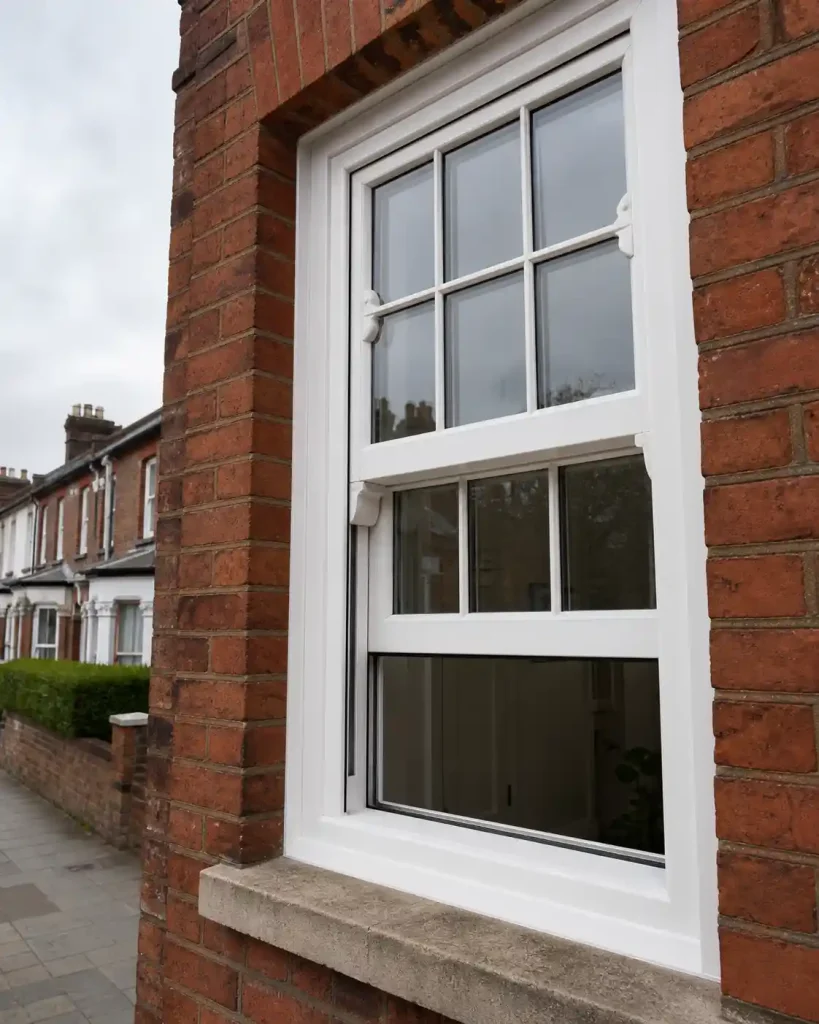
Whether you are replacing a single window or upgrading an entire Victorian terrace, our made-to-measure sliding sash windows are designed to suit the character of your property while meeting current building regulation requirements for energy efficiency and ventilation.
What are sliding sash windows?
Sliding sash windows are a traditional British window style that has been a defining feature of domestic architecture since the late seventeenth century. They are particularly associated with Georgian, Victorian, and Edwardian properties, and remain one of the most widely recognised window styles across North London and the rest of the UK.
Unlike casement windows that open outward on hinges, sliding sash windows operate on a vertical sliding mechanism. The window frame contains two sashes, upper and lower, each holding a pane of glass. The sashes slide up and down within the frame, allowing the window to be opened from either the top or the bottom, or both simultaneously for maximum ventilation.
In traditional timber sash windows, the sashes are counterbalanced by weights hidden inside the box frame on either side of the window. These weights, connected to the sashes by cords or chains running over pulleys, offset the weight of the glass and allow the window to stay open at any position without support.
Modern uPVC and aluminium sliding sash windows replicate this functionality using a spring-balanced or spiral balance system built into the frame, removing the need for the traditional weighted box frame while retaining the same smooth, counterbalanced operation.
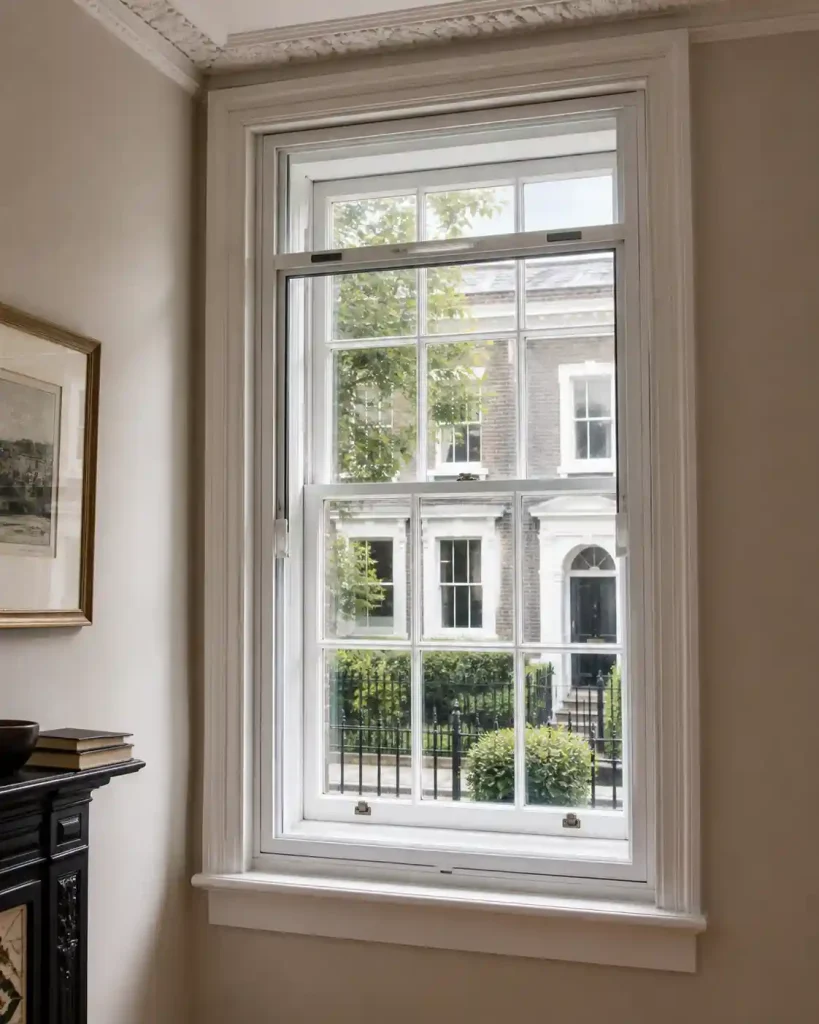
The characteristic details that define the sliding sash style, sash horns at the corners of the lower sash, deep bottom rails, slim glazing bars dividing the glass into panes, and the external staff bead that forms the visible frame edge, are all faithfully replicated in modern uPVC timber-alternative profiles.
This makes it possible to replace original timber windows with modern materials without losing the period character that defines so many Enfield properties.
Sliding sash windows for heritage and period properties
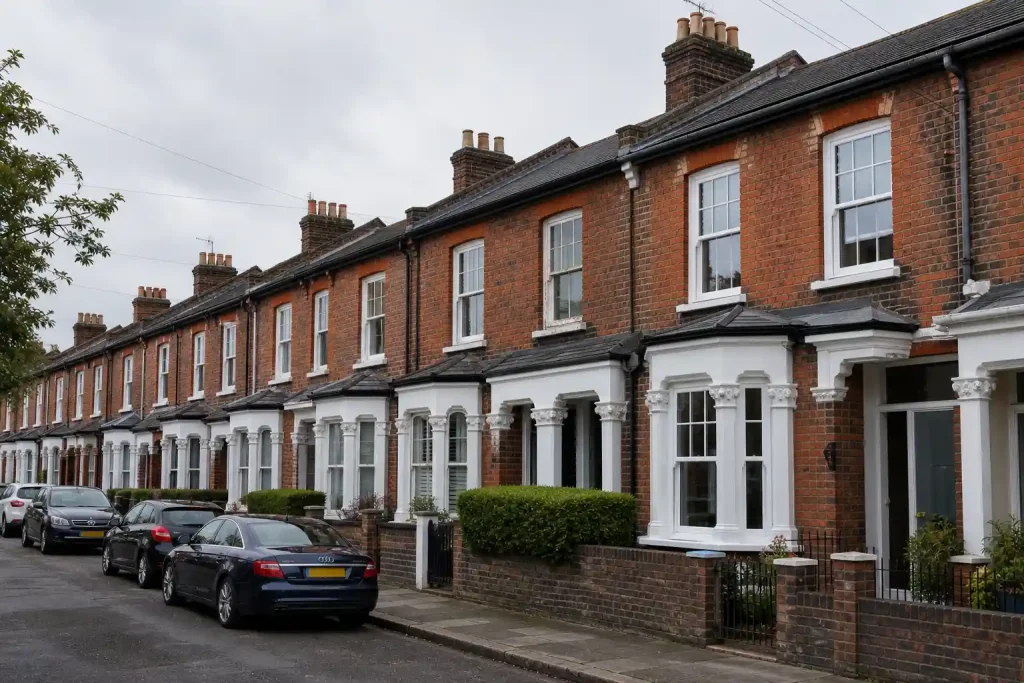
Enfield has one of the highest concentrations of Victorian and Edwardian housing stock in North London. The terraced streets of Bush Hill Park, the semi-detached avenues of Palmers Green and Winchmore Hill, the period properties around Enfield Town and Chase Side, and the Victorian cottages near Forty Hill all share a common architectural feature, sliding sash windows are part of what makes these properties look the way they do.
Replacing original timber sash windows is one of the most common home improvement projects carried out on period properties in Enfield, and for good reason. Original timber windows, even well-maintained ones, typically suffer from draughts around the sash, rattling in the wind, difficulty opening and closing due to swollen or warped frames, condensation on single-glazed glass, and in older properties, deteriorating sash cords that prevent the window from staying open at all.
Modern uPVC timber-alternative sliding sash windows address every one of these problems while preserving the visual character that makes period properties distinctive. The key is in the detail. A well-made timber-alternative sash window should replicate the following features faithfully,
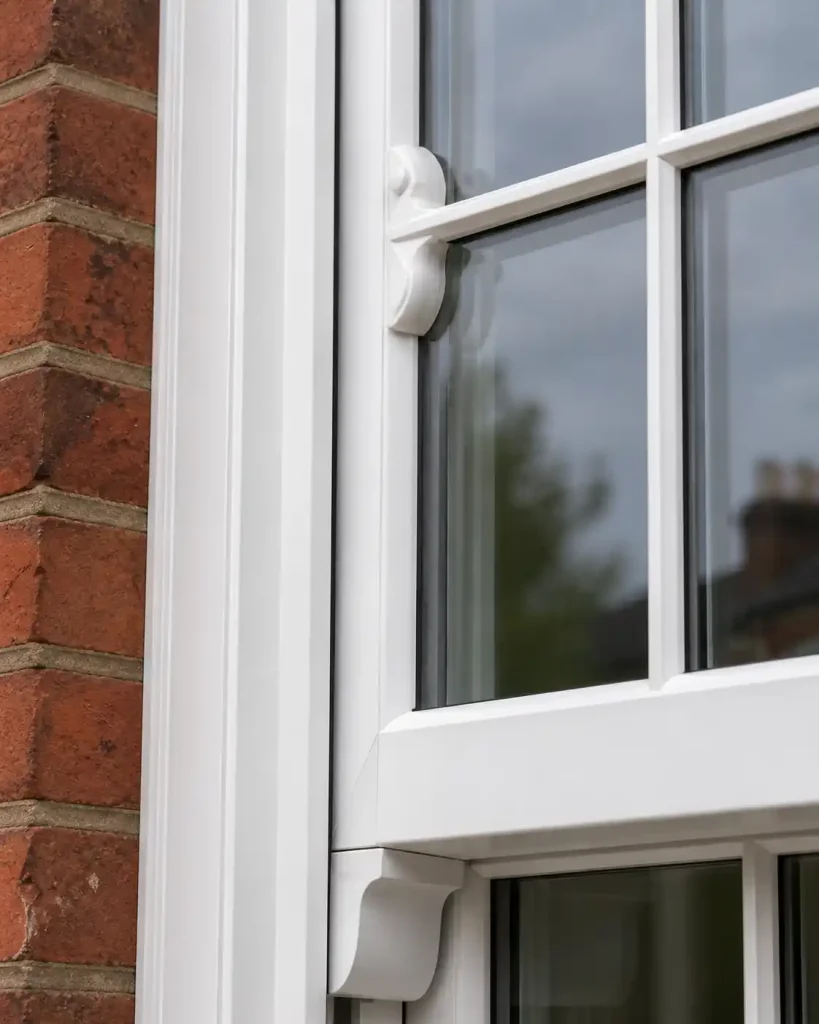
Sash horns, the decorative projections at the bottom corners of the upper sash that are a defining visual detail of Victorian sliding sash windows.
Deep bottom rail, the wider horizontal bar at the base of the lower sash that gives traditional sash windows their characteristic proportions.
Slim glazing bars, dividing the glass into smaller panes in the Georgian or Victorian pattern typical of the property’s era.
Authentic run-through sash horns and fully butt-jointed construction that replicates the appearance of traditional timber joinery rather than the mitred corners associated with standard casement windows.
Woodgrain or smooth white finish options that suit the property’s character and match surrounding windows where required.
The goal is a replacement window that a passer-by would not identify as modern from the street, while the homeowner benefits from double glazing, draught-free operation, and modern security hardware behind the traditional facade.
For properties where a traditional outward-opening style is preferred over the vertical sliding mechanism, our uPVC casement windows offer a similarly sympathetic replacement option for period homes.
Conservation areas and listed buildings in Enfield
For homeowners in certain parts of Enfield, replacing windows is not simply a matter of choosing a style and booking an installation.
Properties located within a conservation area or those with listed building status are subject to additional requirements that affect what can and cannot be installed, and in some cases whether planning permission or listed building consent is needed before any work begins.
Enfield’s conservation areas
Enfield has several designated conservation areas, the most prominent of which is the Enfield Town conservation area, which covers the historic market town centre and surrounding streets.
Other conservation areas exist across the borough, including areas of Winchmore Hill, Forty Hill, and Chase Side. Within these areas, permitted development rights for window replacement may be restricted, meaning the appearance of replacement windows, including frame colour, profile depth, and glazing bar pattern, may need to match the character of the original windows and the surrounding streetscape.
If your property falls within a conservation area, we recommend checking with the London Borough of Enfield planning department before proceeding with any window replacement.
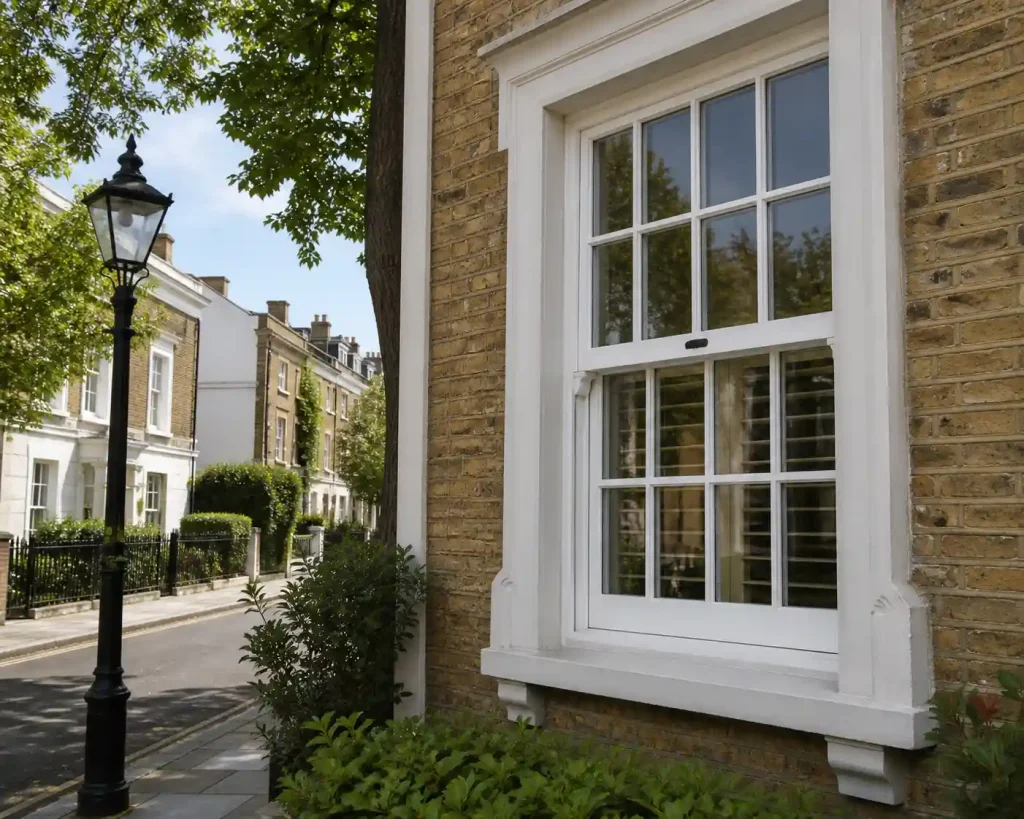
We are familiar with the requirements of Enfield’s conservation areas and can advise on suitable specifications during the initial consultation, helping you avoid the frustration of ordering windows that subsequently require planning approval.
Listed buildings
If your property is listed, whether Grade I, Grade II*, or Grade II, listed building consent is required before any window replacement can be carried out. This is separate from planning permission and applies regardless of whether the windows are visible from the street.
In many listed buildings, original timber sash windows must be repaired rather than replaced, or replaced only with windows that precisely match the original specification in material, profile, and glazing pattern.
Secondary glazing as an alternative
For listed buildings and some conservation area properties where full replacement is not permitted, secondary glazing offers a practical alternative. A secondary glazing system involves fitting an additional internal glazing panel inside the existing window reveal, leaving the original external window entirely untouched.
For sliding sash windows specifically, vertical sliding secondary glazing systems are available that replicate the sash operation internally, maintaining the visual consistency of the window from both inside and outside the property.
Secondary glazing significantly improves thermal performance and noise reduction without altering the external appearance of the building, making it a compliant and cost-effective solution for homeowners in listed buildings and sensitive conservation areas where replacement is not an option.
As a FENSA-registered installer, we self-certify compliance with building regulations on every installation and are happy to advise on whether your property requires planning consent, listed building consent, or neither, before any commitment is made.
uPVC vs timber vs aluminium, which is right for your property?
Sliding sash windows are available in three main frame materials, each with different characteristics, price points, and suitability for different property types. Understanding the differences makes it easier to choose the right option for your home without overspending on features you do not need or underspending on a material that will not last.
Timber sliding sash windows
Timber is the original material for sliding sash windows and remains the most authentic option for period properties. A well-made timber sash window, crafted from sustainably sourced hardwood or softwood, replicates every detail of the original with complete accuracy, matching the profile depth, glass-to-frame ratio, and visual weight of a Victorian or Edwardian window precisely.
The trade-off is maintenance. Timber sash windows require regular painting or staining every five to seven years to prevent moisture ingress, and the frames can swell, warp, or rot if maintenance is neglected. Sash cords need periodic replacement as they wear through use. The upfront cost is also higher than uPVC or aluminium.
For listed buildings where original timber must be matched precisely, or for homeowners who prioritise complete authenticity above all else, timber remains the appropriate choice. For most Enfield homeowners replacing draughty original windows, however, a timber-alternative uPVC product offers the same appearance with significantly less ongoing commitment.
uPVC timber-alternative sliding sash windows
Modern uPVC sliding sash windows have come a long way from the early profiles that looked nothing like the windows they were replacing.
Today’s timber-alternative uPVC profiles faithfully replicate the proportions, joinery details, and surface texture of traditional timber sash windows, including sash horns, deep bottom rails, run-through horns, and fully butt-jointed construction.
uPVC does not rot, warp, crack, or require painting at any point during its lifespan. The multi-chamber frame construction provides strong thermal insulation, and modern uPVC sliding sash windows achieve A energy ratings as standard.
The colour is consistent throughout the material, so minor surface marks do not reveal a different colour underneath. For the majority of Enfield homeowners replacing original timber sash windows on Victorian and Edwardian properties, uPVC timber-alternative is the most practical and cost-effective choice.
Aluminium sliding sash windows
Aluminium sliding sash windows are less common than uPVC but offer a distinctive set of advantages for the right property. The inherent strength of aluminium allows for significantly slimmer frames than uPVC, which increases the glass-to-frame ratio and allows more natural light into the room.
For contemporary properties, extensions, or larger window openings where a minimal aesthetic is preferred, aluminium sliding sash windows offer a cleaner, more refined appearance.
Modern aluminium frames incorporate a polyamide thermal break to prevent heat transfer through the metal, achieving thermal performance comparable to uPVC. The powder-coated finish is available in a wide range of colours, is highly resistant to fading and chipping, and requires no maintenance beyond occasional cleaning.
The expected lifespan of an aluminium frame is typically 30 to 40 years or more, making it the longest-lasting material option of the three.
Aluminium is also increasingly used on heritage and period properties where a Crittall-style or slim-frame appearance is desired, particularly on rear extensions and ground floor additions where planning restrictions are less stringent than on the principal elevation.
Which should you choose?
As a general guide, uPVC timber-alternative suits most Victorian and Edwardian properties in Enfield where the goal is a like-for-like replacement that improves performance without altering the appearance.
Timber is appropriate for listed buildings or homeowners for whom complete authenticity is the priority. Aluminium suits contemporary properties, extensions, and situations where maximum glass area and a slim, modern frame are preferred.
If you are unsure which material is right for your property, we are happy to advise during a free consultation, with no obligation to proceed. If you are considering aluminium for a rear extension or contemporary addition to your property, you may also find our aluminium casement windows in Enfield page useful for comparison.
Energy efficiency and thermal performance
One of the most compelling reasons to replace original timber sash windows in an Enfield period property is the improvement in thermal performance. Single-glazed timber sash windows, even well-maintained ones, allow a significant amount of heat to escape through the glass and around the frame.
Draughty sash windows are one of the most common sources of heat loss in Victorian and Edwardian homes, and the difference after replacing them with modern double-glazed units is usually noticeable within the first heating season.
How modern sash windows improve thermal performance
Modern sliding sash windows achieve their thermal performance through a combination of frame design, glazing specification, and sealing systems working together.
The uPVC multi-chamber frame traps air within the hollow sections of the profile, creating a series of insulating barriers that slow heat transfer between the inside and outside of the frame.
The more chambers in the profile, the better the insulation. This is a significant improvement over a solid timber frame, which conducts heat more readily and loses its insulating properties further as gaps develop around the sash over time.
Double glazing uses two panes of glass separated by an insulating gap, typically filled with argon gas, which is denser than air and reduces heat transfer more effectively.
Low-emissivity glass, commonly referred to as low-e glass, adds a thin metallic coating to the inner pane that reflects heat back into the room rather than allowing it to pass through the glass and escape outside.
Together, argon gas filling and low-e glass make a substantial difference to the thermal performance of the glazed unit. Triple glazing adds a third pane of glass for further insulation, reducing heat loss further still and providing additional noise reduction.
For properties on busy roads in Enfield or those seeking the maximum available thermal performance, triple glazing is worth considering, though for most standard residential properties modern double glazing with low-e glass and argon gas performs extremely well.
Energy ratings
Our sliding sash windows achieve a Window Energy Rating of A as standard, assessed against the British Fenestration Rating Council framework that takes into account heat loss through the frame and glass, solar heat gain, and air leakage.
An A-rated sliding sash window represents a significant improvement over original single-glazed units, which typically achieve an F or G rating.
Approved Document L compliance
All replacement window installations must comply with Approved Document L of the Building Regulations, which sets minimum energy performance standards for windows in England.
As a FENSA-registered installer, we self-certify compliance with Approved Document L on every installation, removing the need for a separate building control application.
For homeowners in Enfield replacing original single-glazed timber sash windows, the improvement in warmth, reduction in cold spots near windows, and lower heating costs are among the most frequently mentioned benefits after installation.
Noise reduction
Noise reduction is one of the most frequently mentioned benefits by homeowners in Enfield who have replaced their original single-glazed sash windows, and it is easy to understand why.
Many of Enfield’s most characteristic Victorian and Edwardian streets sit close to busy roads, railway lines, and town centre activity that generates a constant background of traffic noise, particularly in the evenings and early mornings.
Where noise is a particular concern in Enfield
Properties on or near the A10 Hertford Road, one of North London’s busiest arterial routes running through Edmonton and Enfield Town, experience significant road noise throughout the day and night.
The A1010 Hertford Road corridor, roads near Enfield Town station and Enfield Chase station, and the terraced streets close to the town centre are all areas where original single-glazed sash windows provide very little acoustic protection.
Even away from the main roads, Victorian terraces in Bush Hill Park and Palmers Green are typically built close to the street with minimal front garden depth, meaning street noise, passing vehicles, and pedestrian activity transmit easily through original thin single glazing.
How modern sash windows reduce noise
The primary mechanism for noise reduction in modern sliding sash windows is the air gap between the two panes of glass in a double-glazed unit.
Sound waves lose energy as they pass through glass, then through the insulating gap, then through the second pane, resulting in a measurable reduction in the volume of external noise that reaches the interior.
The quality of the seals around the sash also plays a significant role. Original timber sash windows frequently develop gaps between the sash and the frame as the timber moves seasonally, and these gaps allow sound to pass through directly regardless of the glazing.
Modern uPVC and aluminium sash windows use compression seals and weather gaskets that close tightly when the sash is in the closed position, eliminating the acoustic weak points that gaps and poorly fitting frames create.
Acoustic glass
For properties with particularly high levels of external noise, acoustic glass is available as an upgrade on double-glazed units.
Acoustic glass uses a laminated inner pane with a specialist interlayer that absorbs sound energy more effectively than standard float glass, providing a greater level of noise reduction than conventional double glazing alone.
This is worth considering for properties directly on the A10, near the railway lines at Enfield Chase or Gordon Hill, or on any street where road and rail noise is a persistent concern.
Triple glazing also provides additional noise reduction compared to double glazing, both through the additional glass layer and through the wider overall unit depth, and may be worth considering for the same high-noise locations.
Security
Original timber sash windows, particularly those in Victorian and Edwardian properties that have not been upgraded, are among the least secure window types found in Enfield’s housing stock.
Many retain their original single-latch fasteners, which provide minimal resistance to forced entry and can often be manipulated from outside using a thin implement inserted through the gap between the sashes.
Replacing original sash windows with modern units that incorporate proper security hardware is one of the most straightforward ways to improve the security of a period property.
Multi-point locking
Modern sliding sash windows incorporate multi-point locking systems that engage at several points along the meeting rail and frame simultaneously, rather than relying on a single central latch.
This distributes resistance across the full width of the window, making forced entry significantly more difficult. The locking mechanism is operated by the window handle and engages automatically when the sash is closed and locked, requiring no additional action from the homeowner.
Secured by Design
Where specified, our sliding sash windows can be supplied to meet the Secured by Design standard, the UK police-backed security accreditation scheme for doors and windows.
Secured by Design products have been independently tested to resist forced entry attempts and meet the requirements of PAS 24, the British Standard for enhanced security performance in windows and doors.
This standard is increasingly required by insurers and is worth specifying for ground floor windows and properties in areas with higher rates of opportunistic break-ins.
Heritage window locks
For homeowners who want to retain the traditional appearance of their sash window hardware, heritage-style window locks are available that combine a period aesthetic with modern security performance.
These locks are designed to complement the character of Victorian and Edwardian properties while providing a level of security that original ironmongery simply cannot match.
Ventilation security
One practical security consideration specific to sliding sash windows is the ability to open the top sash rather than the bottom for ventilation.
Opening the top sash rather than the bottom reduces the risk of access from outside at ground floor level, as the opening is positioned higher up in the frame.
Sash stops and restrictors can also be fitted to limit how far either sash can be opened, allowing background ventilation while preventing the window from being opened wide enough to allow entry.
Low maintenance
For many homeowners in Enfield replacing original timber sash windows, the reduction in ongoing maintenance is as compelling a reason as the improvement in thermal performance or security.
Original timber sash windows demand a level of regular attention that most modern homeowners find impractical, and the consequences of neglecting that maintenance, rotting frames, swollen sashes, failed sash cords, and deteriorating putty, tend to compound over time into increasingly expensive repair bills.
What original timber sash windows require
To remain in good condition, original timber sash windows need painting or staining every five to seven years to prevent moisture penetration.
The putty holding the glass in the frame deteriorates over time and needs periodic replacement.
Sash cords stretch and eventually break, causing one or both sashes to drop or preventing them from staying open.
Timber swells in damp conditions, causing sashes to stick or bind in the frame, and shrinks in dry conditions, creating gaps that allow draughts and outside noise into the room.
In older properties where original windows have been in place for decades without proper maintenance, all of these issues frequently exist simultaneously.
What modern uPVC sash windows require
Modern uPVC sliding sash windows require none of this. The frames do not rot, warp, crack, swell, or shrink regardless of weather conditions.
They do not need painting at any point during their lifespan, and the colour is consistent throughout the material rather than applied as a surface coating, so minor marks and surface wear do not reveal a different colour underneath.
The spring balance or spiral balance system that replaces the traditional weighted sash cord mechanism is sealed within the frame and requires no maintenance or replacement under normal operating conditions.
Cleaning is straightforward, a wipe-down of the frames with a damp cloth and a standard glass cleaner for the panes.
The hardware, handles, locks, and hinges benefit from an occasional check and light lubrication to keep the mechanism running smoothly, but this takes only a few minutes and requires no specialist knowledge or tools.
Aluminium sash windows
Aluminium frames are equally low maintenance. The powder-coated finish is highly resistant to fading, chipping, and corrosion, and retains its appearance reliably over the 30 to 40 year lifespan of the frame.
Like uPVC, aluminium does not warp or swell, and requires nothing more than occasional cleaning to maintain its appearance.
For homeowners in Enfield who have spent years maintaining original timber sash windows, or who have inherited a property with windows in poor condition, the switch to modern uPVC or aluminium represents a permanent end to window-related maintenance costs and the annual anxiety of deciding whether this is the year the frames finally need repainting.
Colours and customisation
One of the most important considerations when replacing sliding sash windows on a period property is ensuring the new windows suit the character of the building and, where relevant, the requirements of the surrounding conservation area or street.
Modern uPVC and aluminium sliding sash windows offer a wide range of colour, finish, and detail options that make it straightforward to find a specification that looks right for your property.
Frame colours
The most widely used colours for sliding sash windows on Enfield’s period properties are,
- White, the most traditional and widely used finish for Victorian and Edwardian sash windows, clean and neutral, suits the majority of period properties and is the closest match to the painted timber appearance of original windows.
- Cream, a softer alternative to white that suits properties with warmer brick tones or those where a slightly less stark finish is preferred. Particularly well suited to Edwardian semis in Palmers Green and Winchmore Hill where cream was historically a common painted finish.
- Woodgrain finishes, available on uPVC frames, including light oak, rosewood, and golden oak, for homeowners who want the warmth and texture of a timber appearance without the maintenance requirements. Woodgrain foils are applied to the outer face of the frame and can also be specified on the interior face independently, allowing a woodgrain exterior with a white interior if preferred.
- Anthracite grey and black, increasingly popular on period properties where a bolder, more contemporary contrast is desired, particularly on rear elevations and extensions where planning restrictions are less stringent than on the principal street-facing facade.
Heritage detail options
Beyond colour, the character of a sliding sash window is defined by its detailing. Options available on our uPVC timber-alternative range include,
Sash horns, the decorative projections at the bottom corners of the upper sash that are the most visually distinctive feature of a Victorian sliding sash window. Omitting sash horns on a period property replacement immediately reads as a modern substitution rather than a sympathetic replacement.
Glazing bars, dividing the glass into smaller panes in Georgian or Victorian patterns. Available as internal Georgian bars within the sealed unit or as external bars applied to the glass surface, depending on the profile and the planning requirements of the installation.
Deep bottom rail, the wider horizontal bar at the base of the lower sash that gives traditional sash windows their characteristic proportions and visual weight.
Run-through sash horns and fully butt-jointed construction, replicating the appearance of traditional timber joinery at the corners of the sash rather than the mitred joints associated with standard casement profiles.
Hardware and ironmonger
Sash window hardware includes the fitch fastener or sash lock at the meeting rail, sash lifts on the lower sash, and any additional security locks or restrictors specified.
Hardware is available in a range of finishes including polished chrome, brushed nickel, satin silver, antique brass, and heritage black, allowing you to match the ironmongery to the character of the property and your interior fittings.
For period properties in conservation areas, heritage-style ironmongery that replicates the appearance of original Victorian and Edwardian hardware is available and may be required or recommended depending on the planning requirements of the specific installation.
Secondary glazing for sash windows
For some properties in Enfield, full window replacement is not the most appropriate solution, and in certain cases it may not be permitted at all.
Secondary glazing offers a practical and fully compliant alternative that improves the thermal and acoustic performance of existing sash windows without altering their external appearance or requiring planning consent in most cases.
What is secondary glazing?
Secondary glazing involves fitting an additional internal glazing panel inside the existing window reveal, on the room side of the original window. The original window remains completely untouched externally, which means the street-facing appearance of the building is unchanged.
The secondary panel creates an insulating air gap between the original glass and the new internal panel, significantly improving thermal performance and reducing noise transmission through the window.
When is secondary glazing the right choice?
Secondary glazing is particularly relevant for Enfield homeowners in the following situations,
Listed buildings, where listed building consent is required for window replacement and consent is either unlikely to be granted for full replacement or where the original windows are considered to be of sufficient historic significance to be retained. Secondary glazing allows the original windows to remain in place while substantially improving their performance.
Conservation area properties, where the appearance of replacement windows must match the original closely and where the local planning authority has indicated that replacement with modern materials is not appropriate for that particular building or street.
Properties with original windows in good structural condition, where the frames and sashes are sound but the single glazing is causing heat loss and noise problems.
In this situation secondary glazing may be more cost effective than full replacement and avoids the disruption of removing and disposing of the original windows.
Vertical sliding secondary glazing for sash windows
Standard secondary glazing panels are often hinged or lift-out, but for sliding sash windows specifically, vertical sliding secondary glazing systems are available that replicate the sliding sash operation internally.
The secondary panel slides up and down independently of the original window, maintaining visual consistency from inside the room and allowing ventilation to be controlled in the same way as the original window.
This type of secondary glazing is particularly well suited to properties in the Enfield Town conservation area and other parts of the borough where original sash windows are subject to conservation requirements, as it preserves the operational character of the window from both inside and outside the building.
Performance improvements
Secondary glazing typically reduces heat loss through the window by 60 to 70 percent compared to the original single-glazed unit alone, and provides significant noise reduction, particularly when the air gap between the original glass and the secondary panel is wide enough to disrupt low-frequency sound waves.
For properties near the A10, railway lines, or busy town centre streets in Enfield, the acoustic improvement from secondary glazing can be substantial even without replacing the original windows.
As with full replacement, we are happy to assess whether secondary glazing or full replacement is the more appropriate solution for your property during a free consultation, with no obligation to proceed either way.
Cost guide, sliding sash windows Enfield
The cost of sliding sash windows in Enfield depends on the frame material, window size, glazing specification, heritage detail requirements, and the complexity of the installation.
The prices below are intended as a general guide to help you budget before requesting a quote. As with all made-to-measure window installations, the most accurate price comes from a site survey where measurements and installation conditions can be properly assessed.
uPVC sliding sash windows, Enfield
- Single uPVC sliding sash window, supply and install, £600 to £900
- Double uPVC sliding sash window, supply and install, £900 to £1,200
- Larger or non-standard sizes, supply and install, £1,000 to £1,500
Supply only options are available, typically 30 to 40 percent less than the supply and install figures above.
Aluminium sliding sash windows, Enfield
- Single aluminium sliding sash window, supply and install, £900 to £1,300
- Double aluminium sliding sash window, supply and install, £1,300 to £1,800
- Larger or non-standard sizes, supply and install, £1,500 to £2,200
Supply only options are available on aluminium sliding sash windows for customers who prefer to arrange their own installation.
Secondary glazing for sash windows, Enfield
- Single secondary glazing panel for existing sash window, supply and install, £350 to £600
- Vertical sliding secondary glazing system, supply and install, £500 to £800
Secondary glazing is generally more cost effective than full replacement and may be the appropriate solution for listed buildings and conservation area properties where full replacement is not permitted.
What affects the cost?
Several factors influence the final price beyond the base window specification,
Frame material
uPVC is the most cost effective option and suits the majority of period properties in Enfield well. Aluminium costs more upfront but offers a longer lifespan and slimmer sightlines, making it a better long term investment for some properties.
Heritage detail specification
Sash horns, deep bottom rails, run-through horn construction, and glazing bars all add to the manufacturing complexity and affect the final price. The more closely the window replicates original period detailing, the more involved the production process.
Glazing specification
Standard double glazing with low-e glass and argon gas is included in the base price ranges above. Triple glazing and acoustic glass are available as upgrades and add to the cost, the exact amount depending on the size of the unit.
Window size and configuration
Larger windows and non-standard shapes require more material and more involved installation. Bay window sash configurations and curved head windows add further complexity and cost.
Installation complexity
Ground floor windows in straightforward openings are generally quicker to install than upper floor windows or those in properties with unusual reveal depths, narrow access, or existing frames in poor condition that require additional preparation work before the new window can be fitted.
Number of windows
Replacing multiple windows in a single visit is typically more cost effective per window than individual replacements carried out at separate times.
Conservation area and listed building requirements
Where planning consent or listed building consent is required, there may be additional costs associated with preparing and submitting the application. We are happy to advise on this during the initial consultation.
Getting an accurate quote
The figures above give a useful starting point, but the most reliable way to get an accurate price is through a site survey. This allows us to assess the existing openings, examine the condition of the existing frames and reveals, take precise measurements, and recommend the most appropriate specification for your property and budget.
We carry out surveys across all Enfield postcodes, EN1, EN2, and EN3, and can usually arrange a visit within a few days of your enquiry. All quotes are free and provided without any obligation to proceed.
Installation process
We aim to keep the installation process as straightforward and disruption-free as possible, whether you are replacing a single window or upgrading an entire period property across multiple floors.
Here is what to expect when you choose Urgent Windows for your sliding sash window installation in Enfield.
Step 1, initial consultation
The process begins with a conversation about your requirements. We will discuss the property type, the condition of the existing windows, the material and style options that suit your home, and any specific considerations such as conservation area requirements, listed building status, or whether secondary glazing may be more appropriate than full replacement for your situation. This can be done over the phone, via WhatsApp, or in person during a site visit.
Step 2, survey and measurement
We carry out a detailed site survey at your property, taking precise measurements of each opening and assessing the condition of the existing frames, reveals, and sill details.
For period properties, this stage also involves examining the existing box frame construction to understand whether the original weighted sash mechanism is intact, and assessing the condition of any original timber that may affect the installation approach.
If your property is in a conservation area, we will advise on suitable specifications at this stage and flag any planning considerations before any commitment is made. We cover all Enfield postcodes, EN1, EN2, and EN3, and surrounding areas, and can usually arrange a survey within a few days of your initial enquiry.
Step 3, product selection and quote
Following the survey, we provide a clear itemised quote covering the windows specified during the consultation. We will confirm the frame material, colour, glazing specification, and heritage detail choices, and answer any remaining questions before you make a decision. There is no obligation to proceed and no pressure to decide on the day.
Step 4, manufacture and scheduling
Once you are happy to proceed, your windows are ordered to the precise measurements taken during the survey. Made-to-measure sliding sash windows typically take three to five weeks to manufacture depending on the specification, material, and heritage detail requirements.
Timber-alternative uPVC profiles with full heritage detailing and aluminium units with bespoke colour specifications may sit toward the longer end of this range. We will confirm the installation date in advance and keep you informed throughout.
Step 5, installation
Our own installation team carries out all work, we do not use subcontractors. For a standard period property with four to six sash windows, installation is typically completed within one to two days.
The process involves carefully removing the existing window including the original frame and box frame construction where applicable, preparing the opening, fitting the new window to the precise measurements taken during the survey, and finishing the internal and external reveals neatly.
For properties in conservation areas or listed buildings, we take particular care to ensure the finished installation meets the specifications agreed during the planning process.
Step 6, final inspection and certification
On completion, we carry out a full check of every window, testing the sliding operation of both sashes, checking the locking mechanism at all points, and confirming that the seals and weather performance are correct.
Any snagging is resolved before we leave. We then issue your FENSA certificate confirming that the installation complies with current building regulations, along with documentation for your workmanship and product guarantees.
Why choose a local Enfield installer?
Sliding sash window installation on period properties requires a level of local knowledge and practical experience that goes beyond simply fitting a window into an opening.
The specific characteristics of Enfield’s housing stock, the requirements of its conservation areas, and the particular challenges presented by Victorian and Edwardian construction all make a case for choosing an installer who works regularly in the area rather than a national company with no specific knowledge of local properties.
Familiarity with Enfield’s period properties
The Victorian terraces of Bush Hill Park, the Edwardian semis of Palmers Green and Winchmore Hill, the mixed Georgian and Victorian streets around Enfield Town and Chase Side, and the period cottages near Forty Hill all present different construction details, reveal depths, and frame conditions.
Box frame construction in Victorian properties varies considerably between streets and decades of construction, and an installer familiar with Enfield’s housing stock approaches each property with the practical knowledge of what to expect rather than encountering it for the first time on installation day.
Conservation area knowledge
Several parts of Enfield have conservation area designations that affect what replacement windows are appropriate and in some cases require prior planning consent.
A local installer with experience working in the Enfield Town conservation area, Winchmore Hill, and Forty Hill understands the practical requirements of these areas, knows what specifications are likely to be acceptable to the local planning authority, and can advise you accurately at the consultation stage rather than after windows have already been ordered.
Faster response times
Being based in Enfield means we can arrange surveys, consultations, and installations more quickly than a company operating across a wide national area. There are no lengthy waiting lists for a local visit, and if you have a question or need someone to return after installation, the response is measured in days rather than weeks.
For homeowners managing rental properties across Enfield, this responsiveness is particularly valuable when window issues need to be resolved promptly.
Understanding of local planning requirements
The London Borough of Enfield has its own planning policies and conservation area character appraisals that govern window replacement in sensitive areas.
A local installer who regularly submits specifications and liaises with Enfield’s planning department on behalf of customers has a practical understanding of what is and is not likely to be approved, saving you time and avoiding the frustration of ordering windows that subsequently require modification to meet planning requirements.
Ongoing support and local reputation
A significant proportion of our work in Enfield comes through recommendations from previous customers, neighbours, and local letting agents. We have a direct stake in maintaining our reputation in the area we serve, which means our incentive to complete every job properly and support you after installation is genuine. If anything needs attention after your windows are fitted, we are nearby, easy to reach, and motivated to resolve it quickly.
Frequently asked questions
Get a free quote
If you are considering replacing sliding sash windows in your Enfield home, or exploring whether secondary glazing might be the right solution for a listed building or conservation area property, we are happy to help you find the most appropriate option for your situation.
Whether you have a clear specification in mind or are still deciding between uPVC, aluminium, or secondary glazing, our team can answer your questions, advise on conservation area and planning requirements, and provide a free no-obligation quote following a site survey at your property.
We cover all Enfield postcodes, EN1, EN2, and EN3, as well as surrounding areas including Barnet, Southgate, Palmers Green, Winchmore Hill, Bush Hill Park, and Edmonton. Surveys can usually be arranged within a few days of your initial enquiry.
Get in touch via the form below, by phone, or on WhatsApp, and we will get back to you promptly.