
Bay and Bow Windows in Enfield: uPVC and Aluminium Replacement and Installation
More light, more space and a view you will notice from the street. Tell us about your bay and we will recommend the right style, frame and a realistic budget.
Free survey in Enfield: EN1, EN2, EN3, N9, N13, N14, N18, N21.
We replace and install bay and bow windows in uPVC and aluminium for homes across Enfield and nearby North London. This page explains the difference between the styles, what makes a bay different from other replacements, and what bays typically cost.
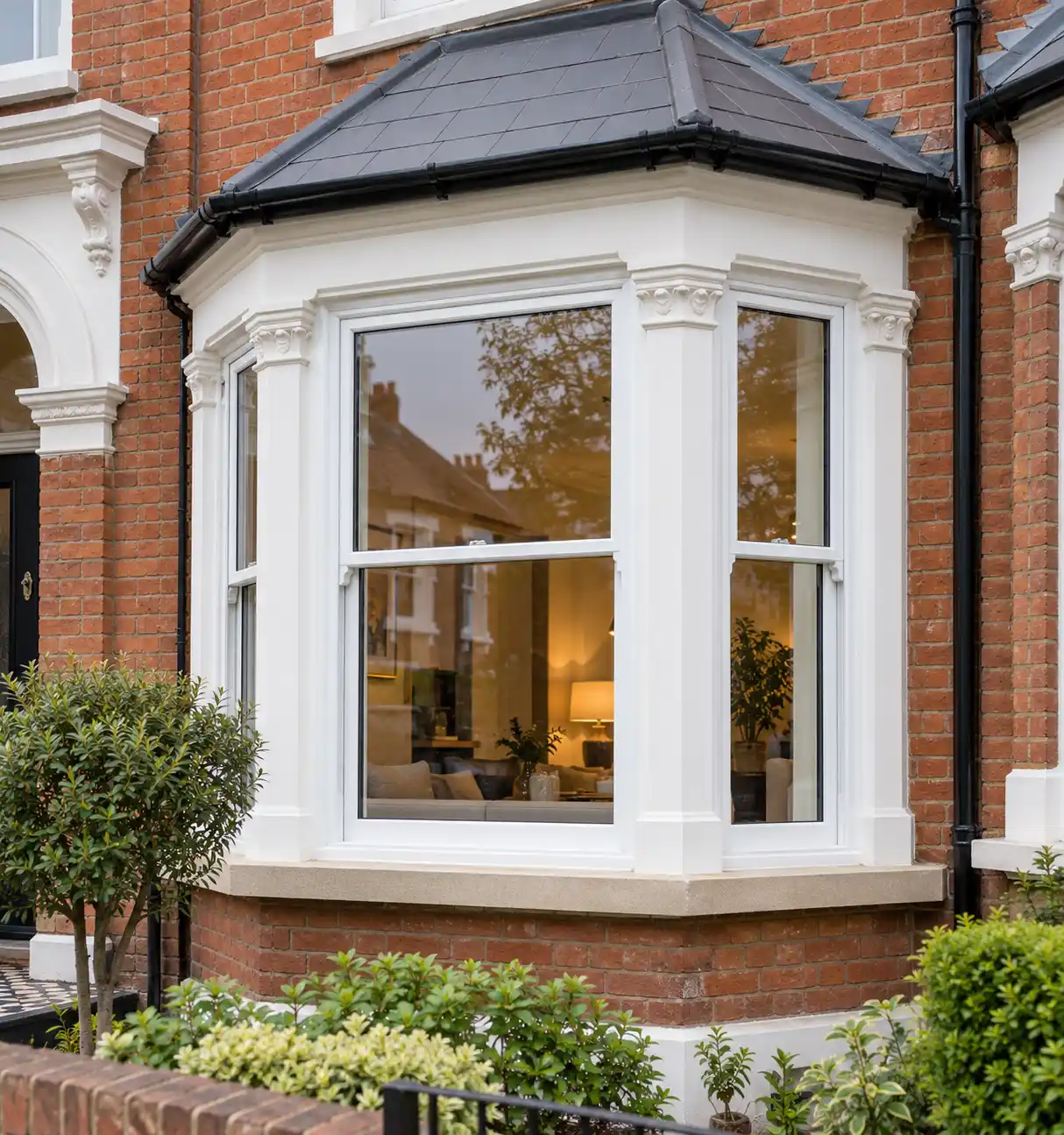
Bay, box bay or bow: what is the difference?
- Bay. Three sections: a flat centre and two angled sides, called flankers. The sides usually sit at 30 or 45 degrees. A bay gives a deeper alcove with room for a window seat. Many Victorian and Edwardian terraces and 1930s semis have one.
- Box bay. The same three sections, but the sides meet the front at 90 degrees. The shape is square, with more floor space and a more contemporary look. It typically costs 10 to 20 percent more than an angled bay.
- Bow. Four or more equal sections on a gentle curve. The alcove is shallower and the shape is softer. A bow typically costs about the same as a bay, or more.
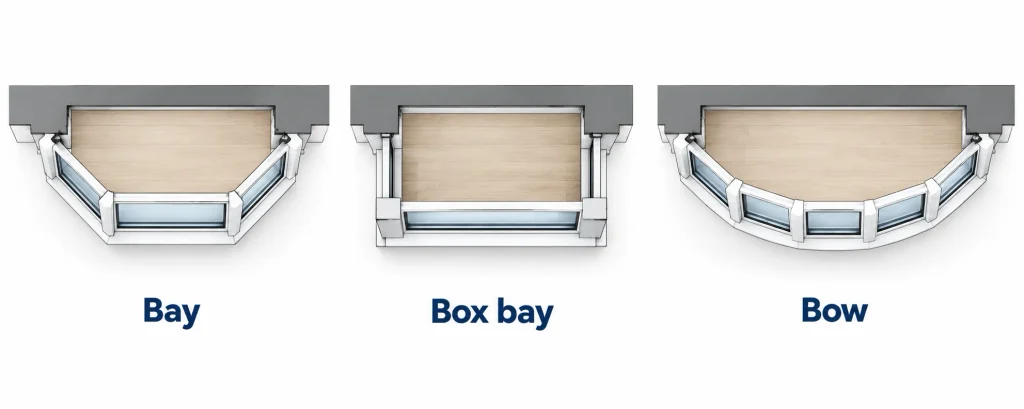
When replacing, keep the shape your house already has. Changing the shape means changing the structure.
Casement or sash flankers?
The side sections can be made as casement windows that open on hinges, or as vertical sliding sashes. The centre section is often fixed.
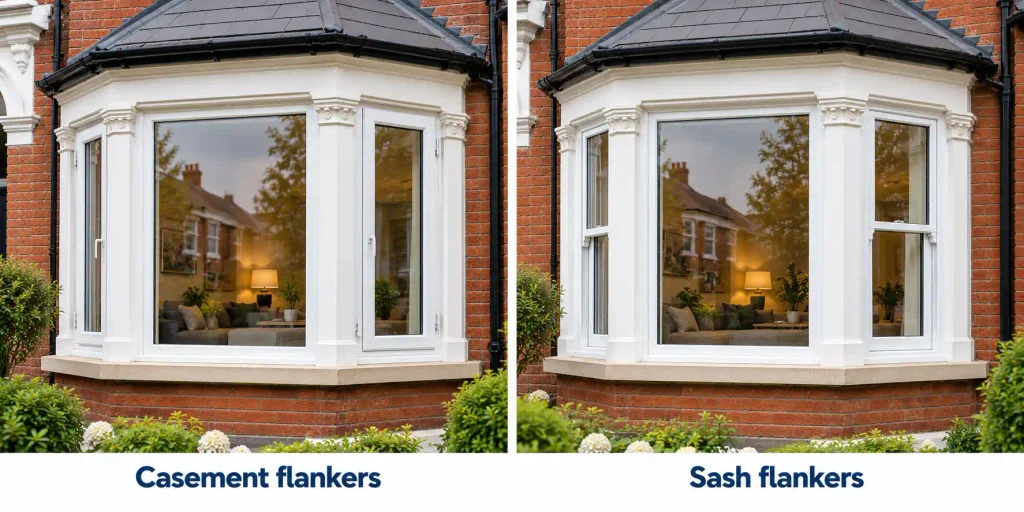
Match the style to your house:
- Period homes: sash-style frames suit them. See our sliding sash windows and flush sash windows pages.
- Most other homes: casements work well and cost less. See our uPVC casement windows and aluminium casement windows pages.
Decorative options include Georgian bars, leaded fanlights and sash horns.
Replacing the windows or the whole bay: what to check
A bay window is part of the structure, so it needs more checking than a flat window.
- Supports. A bay relies on a lintel, corner posts or bay poles to carry the roof and wall above. Old timber frames often shared that load. New frames are not designed to carry it, so the supports need checking before the old frame comes out.
- The bay roof. The small roof above the bay often leaks at the lead or felt, and this is mistaken for a window fault. Fixing it while scaffolding is up avoids a second visit.
- The cill and base. Cills can rot or crack, and the base is a common cold spot.
- Warning signs. A sagging roof, cracks in the brickwork above, gaps between frame and wall, and damp patches all need a survey first.
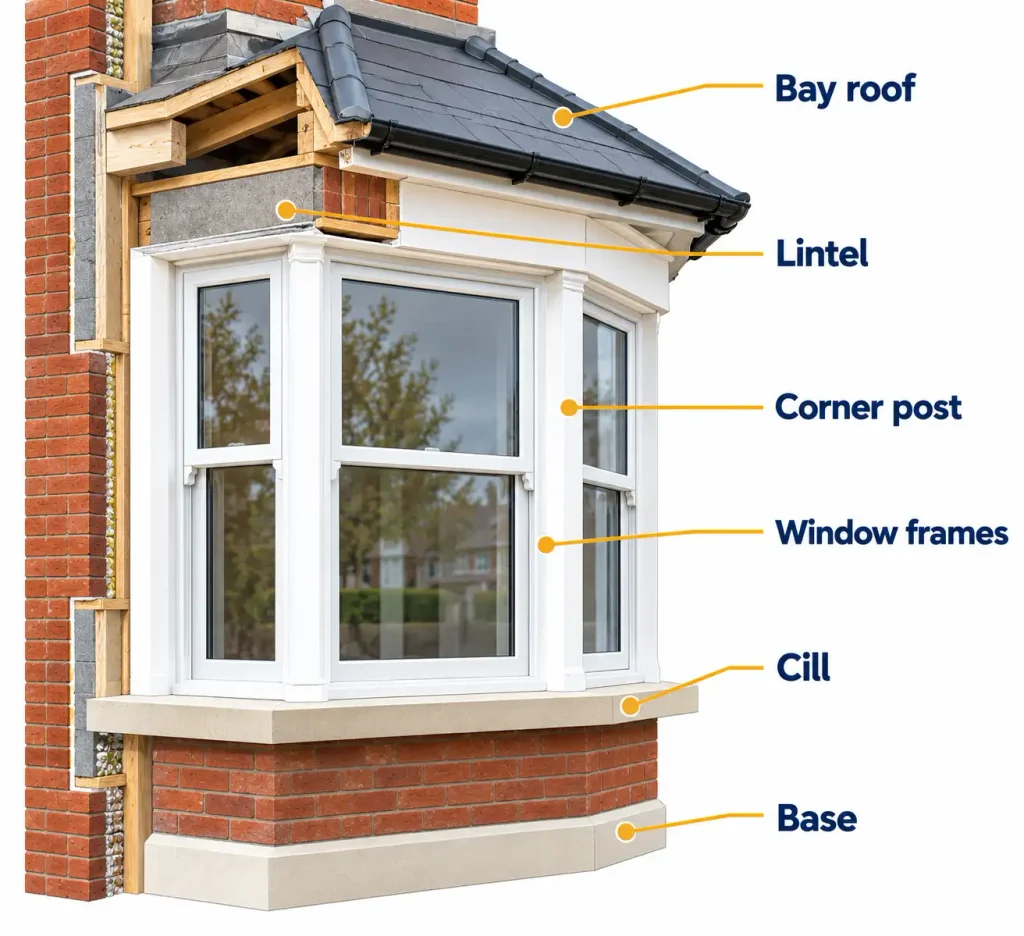
We check the supports, roof and cill at survey. We can replace the bay roof and cill as part of the job. We can also carry out structural work, such as new supports or a lintel, subject to availability and what the survey finds. Where a structural engineer’s calculation is needed, we will tell you at survey.
Light, space and warmth
Bay and bow windows bring in daylight from several angles and make a room feel larger. Modern uPVC frames use multiple chambers to limit heat loss. Aluminium frames include a thermal break. Both use double glazed units. Our double glazing page explains the glazing options.
Insulation around the bay matters as much as the glass. The base, side panels and roof are where heat escapes if they are left uninsulated. The side sections can open for ventilation.
Making the most of a bay
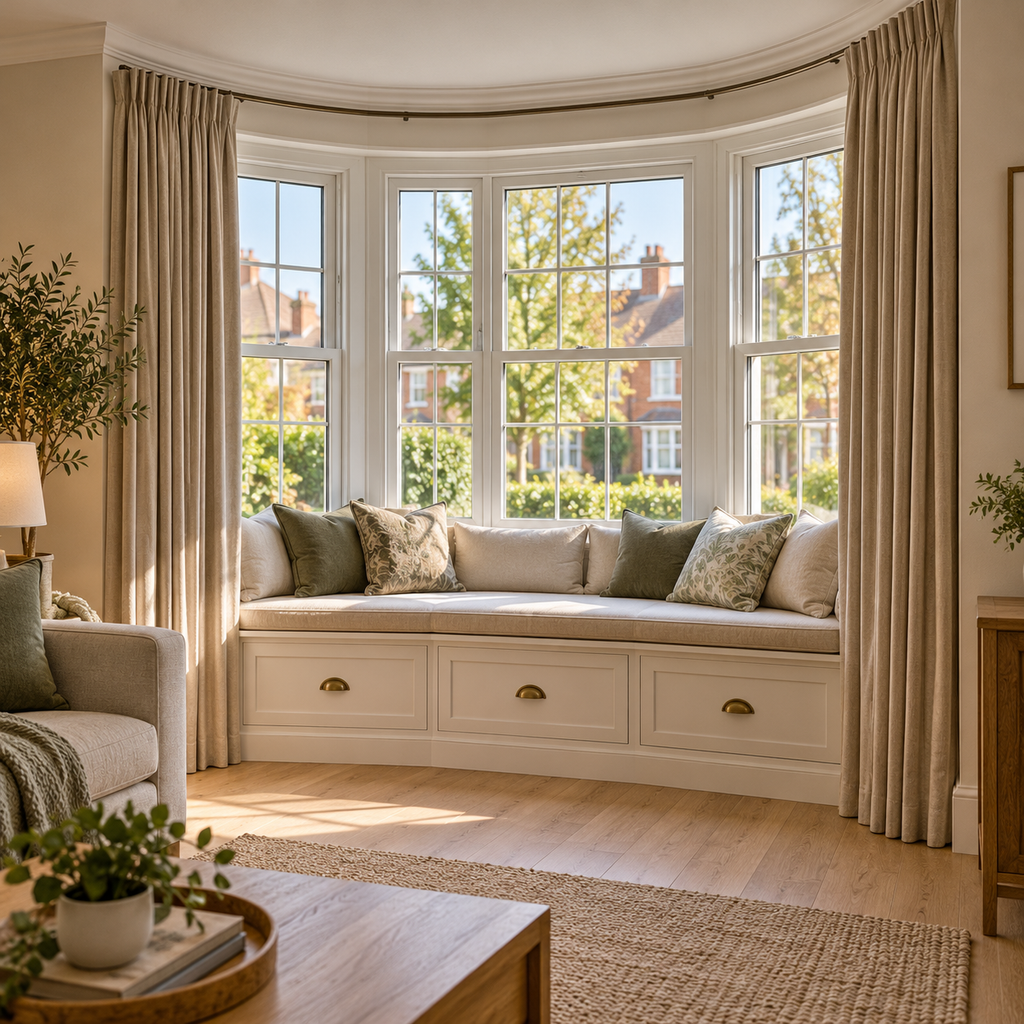
A bay creates useful space for a window seat, a desk or a reading corner. A seat can include storage underneath.
For curtains, you can hang them across the full width of the bay, or in each angle for a tailored look. A curved or bay-shaped pole or track helps.
Blinds fit to individual sections and give a neater, more contemporary finish. Shutters work well too. Check there is enough room for them to clear the opening sections.
Colours and finishes
uPVC comes in white, cream, grey, black and woodgrain finishes. Aluminium comes in a wide RAL colour range. Match the colour to the other windows on the same wall. A bay in a different colour from the rest of the house stands out for the wrong reasons.
Planning and building regulations
Replacing the windows in a bay with a similar appearance does not need planning permission. If you replace the roof covering, it should look similar to the existing one. Conservation areas, Article 4 directions and listed buildings add limits, so check first.
Replacement windows are notifiable work under building regulations. Your installer must either be registered with a competent person scheme or submit a building control application. A bay with new supports or a new lintel may also need structural sign-off. Ask for the certificate when the job is finished.
How much do bay and bow windows cost?
Bay and bow window prices typically fall in these ranges when supplied and fitted. Your price depends on the number of sections, the frame and the condition of the structure, so these figures are a guide, not a quote.
- uPVC bay with three sections: about £1,200 to £2,800
- Aluminium bay: about £2,000 to £4,500
- Five-section bays and bows: usually cost more than three-section bays
- Box bay: typically 10 to 20 percent above an angled bay
Extras that often apply, which we can include in your quote:
- Bay roof replacement: about £300 to £800
- Replacement cill: about £300 to £600
- Scaffolding for upper-floor bays: about £300 to £1,000
- New support or a rebuilt bay structure: about £3,500 to £10,000 or more
What moves the price:
- Number of sections. More sections mean more glazing units and framework.
- Frame material. Aluminium costs more than uPVC.
- Opening sections. More openers add hardware cost.
- Condition of the structure. The supports, cill and roof can change the quote.
The only reliable price comes from a survey of your bay.
Frequently asked questions
Get a Free Bay and Bow Window Quote in Enfield
Tell us about your bay, or send a photo, and we will recommend the right style and give a clear price after a free survey.
We cover Enfield, including EN1, EN2, EN3, N9, N13, N14, N18 and N21, and nearby areas such as Barnet, Southgate and Palmers Green. Call, WhatsApp or use the form below.