
Sliding Patio Doors in Enfield: Aluminium and uPVC, Supplied and Fitted
More light, a wider view and no door swing. Tell us your opening size and we will recommend the right sliding door and a realistic budget.
Free survey in Enfield: EN1, EN2, EN3, N9, N13, N14, N18, N21.
We supply and install aluminium and uPVC sliding patio doors for homes across Enfield and nearby North London, from two-panel replacements to wide lift-and-slide systems. This page explains which type suits your opening, what it costs and what to check before you order.
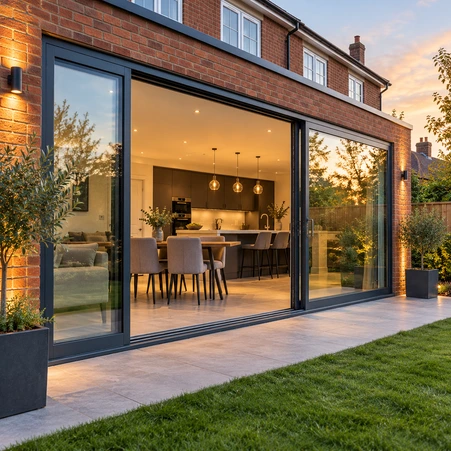
Which type of sliding patio door is right for you?
There are three main types.
- Standard sliding. The panels glide on parallel tracks. It is the most affordable type and comes in uPVC and aluminium. It suits standard openings well.
- Lift-and-slide. Turning the handle lifts the moving panel slightly onto its rollers. When closed, it sits down onto a seal, which can improve airtightness. It carries larger, heavier panes, so it suits wide openings. It costs more.
- Slide-and-turn. Each panel slides, then pivots, so the panels stack to one side. It can clear most of the opening, like a bi-fold door, but with slimmer frames.
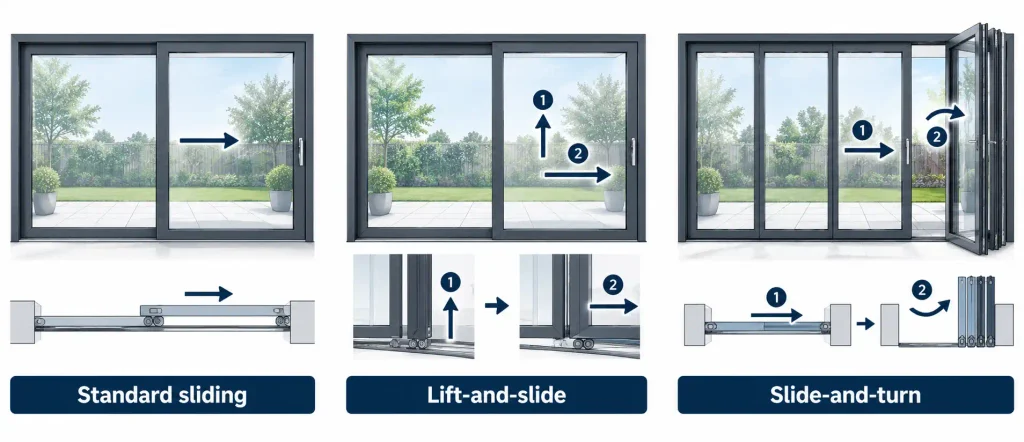
For a standard opening of around 1.8 to 2.4 metres, a well-made standard slider usually performs perfectly well. Choose lift-and-slide for wide openings and a very smooth action. Choose slide-and-turn if you want the opening as clear as possible. If you want to cover the patio outside the doors, see our patio enclosures.
How many panels do you need, and how much will open?
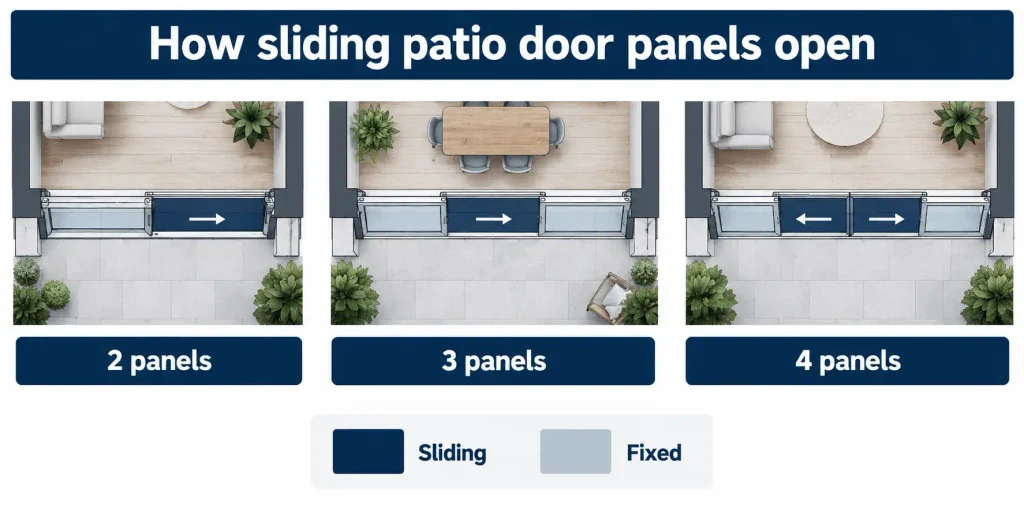
A standard sliding door usually clears about half of the opening. The moving panels stack behind fixed ones, so the rest of the glass stays in place. Multi-track systems can clear more, and slide-and-turn systems clear the most.
As a rough guide, two panels suit typical openings. Three or four panels suit wider ones. Your survey will confirm the right layout for your measurements.
Two practical points help when you choose a layout:
- Pick the sliding panel carefully. Put it where you walk through the door and where furniture will not block it.
- Remember that fixed panels do not open. Check you still get enough ventilation from the part that does.
Aluminium or uPVC sliding doors?
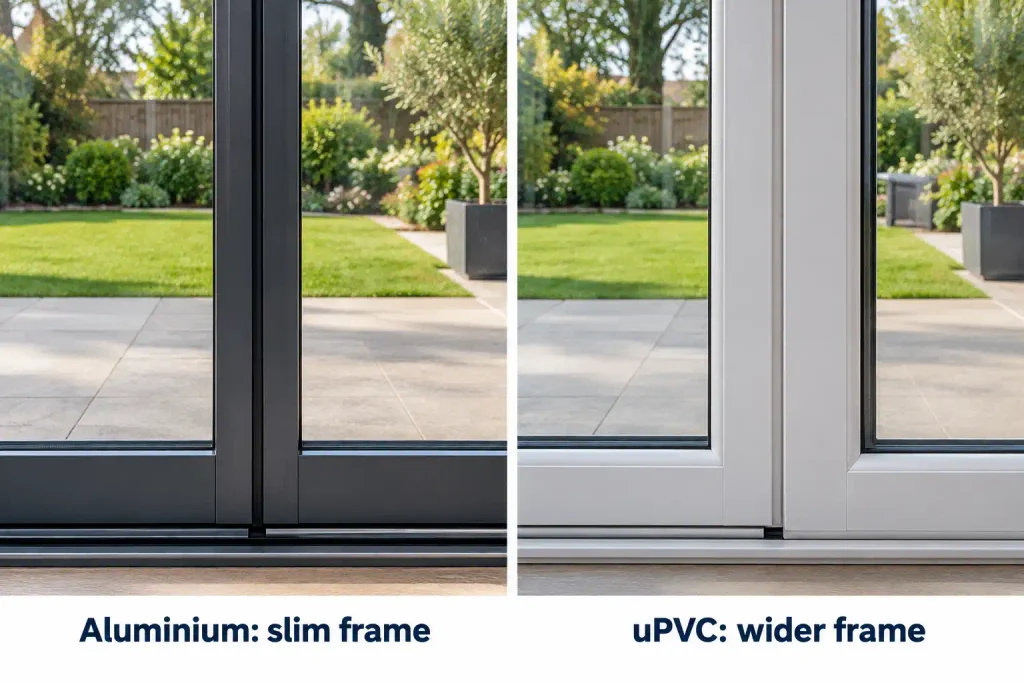
uPVC costs less. Guides put it at roughly 30 to 50 percent below aluminium. It insulates well, needs little upkeep and suits standard openings.
Aluminium is stronger, so the frames can be slimmer. Some systems have sightlines of only 20mm to 35mm where the panels meet, which means more glass and a clearer view. Good aluminium frames include a thermal break to limit heat loss.
Choose uPVC for a standard opening on a sensible budget. Choose aluminium for slim frames, wide openings and a contemporary look.
For the wider aluminium range, including front and internal doors, see our aluminium doors page.
Sliding, bi-fold or French doors?
- Sliding doors suit medium openings where there is little space at the sides, because nothing swings or stacks into the room.
- Bi-fold doors clear the opening more fully, and suit wide extensions.
- French doors suit narrower openings and traditional homes, usually at a lower cost.
Light, views and level access
Slim frames and large panes bring more daylight into the room. They also keep the view of the garden clear when the door is closed.
Low threshold options give step-free access for wheelchairs, pushchairs and anyone with limited mobility. A low threshold needs a good drainage detail so rain does not run indoors. Mention how exposed your patio is when you ask for a quote.
Security
The usual weak point on a sliding door is the panel being lifted out of its track, or the lock being forced. A well-specified door deals with both:
- Multipoint locking secures the panel at several points.
- Anti-lift blocks stop the panel being lifted off the track.
- Internal glazing beads stop the glass being removed from outside.
- Laminated glass holds together if it is broken.
If you want to improve an existing sliding door, you can fit anti-lift blocks, a patio door lock or a security bar. Keep the track clear so the door closes and locks fully.
Glazing and keeping warm
Modern sliding doors use double glazed units with low-emissivity glass and argon gas. Triple glazing adds roughly 20 percent to the cost and helps if road noise is a problem. Our double glazing page explains the options.
Thermally broken aluminium and modern seals reduce draughts and heat loss compared with patio doors from the 1990s and 2000s. Lift-and-slide systems can seal slightly better than standard sliders, because the panel presses down onto a gasket.
Replacing old patio doors: what to check first
Replacing in the same opening.
This does not normally need planning permission. It is still notifiable work under building regulations. Your installer must either be registered with a competent person scheme or submit a building control application. Ask for the certificate when the job is finished, because buyers’ solicitors often ask for it.
Widening or creating an opening.
A wider opening needs a new lintel, specified by a structural engineer, and building regulations approval. For houses, a new opening at the rear or on a side not facing a road is usually permitted development. Flats and maisonettes may need planning permission unless the work is like for like.
Replacing a window with a door.
This also needs a new lintel, a threshold and a step down. It costs more than a straight replacement.
Weight.
Sliding panels are heavy, so the sill and lintel must carry the load properly.
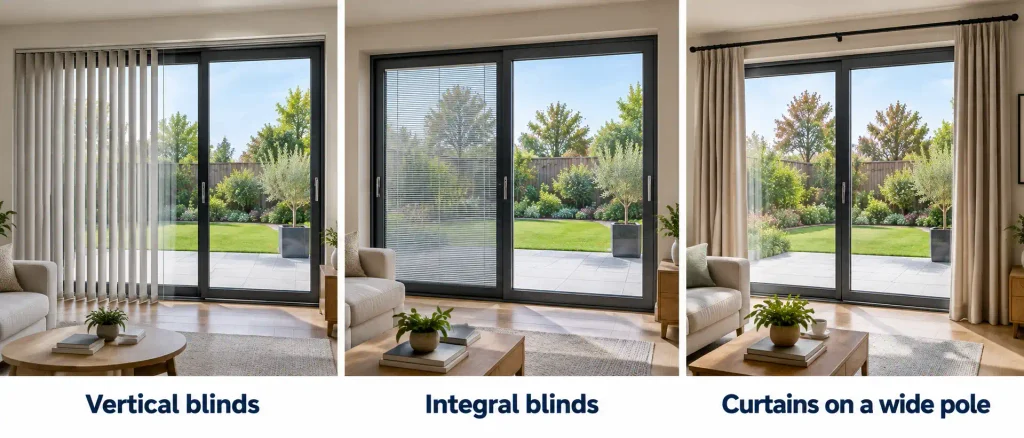
Blinds, curtains and fly screens for sliding doors
Blinds and curtains need to work around a moving panel.
- Vertical blinds move along their own track and suit sliding doors well.
- Integral blinds sit inside the sealed glass unit and never catch the moving panel.
- Curtains need a wide pole or track that extends well beyond the opening, so they stack clear of the door.
- Plantation shutters are available on sliding tracks for a more finished look.
- Fly screens are available in sliding formats. They add a second track, so mention one when you order.
Looking after your sliding doors
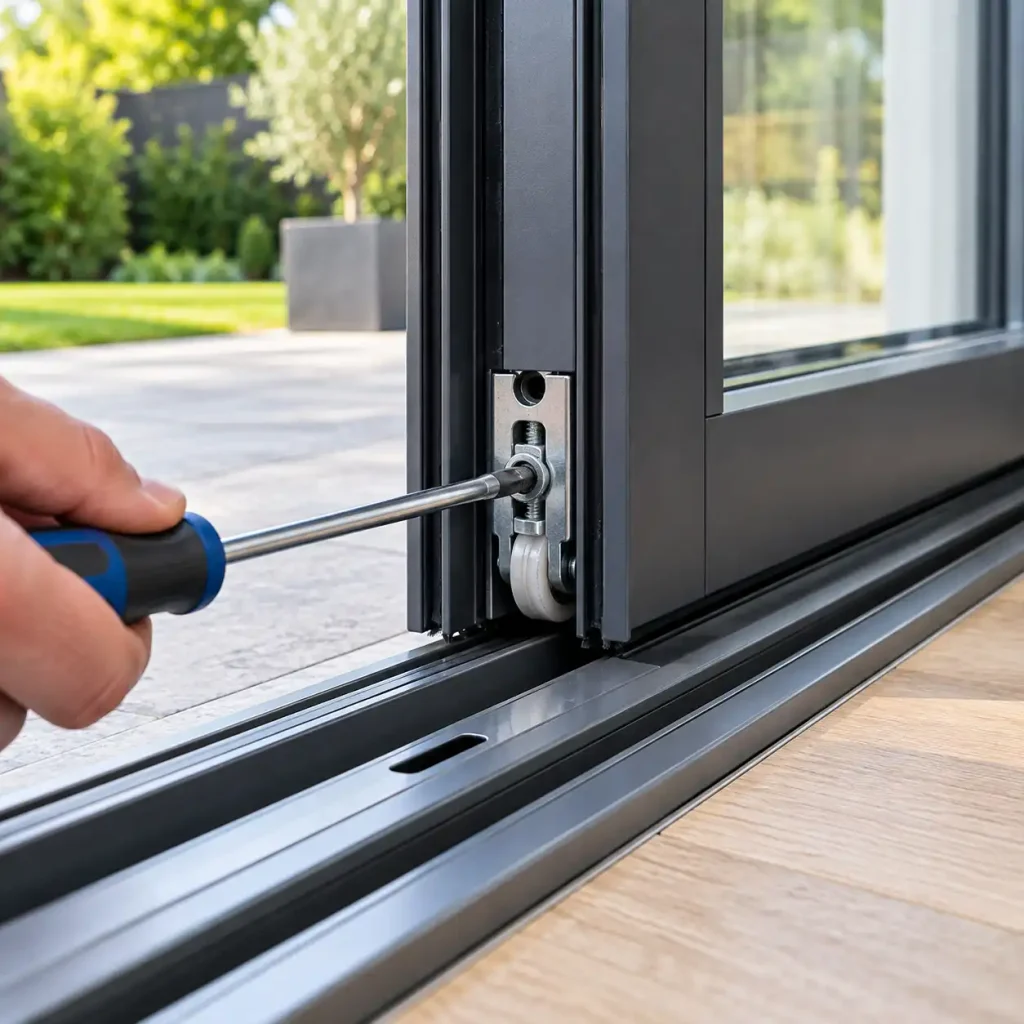
Most problems come from a dirty track or rollers that need adjusting.
- Clean the track. Vacuum out grit and wipe it clean. Check the small drainage holes are clear.
- Lubricate lightly. Use a silicone spray on the track and rollers. Avoid oil, which attracts dirt.
- Adjust the rollers. Most doors have adjuster screws at the bottom corners of the moving panel. Turn each a little at a time until the panel runs level and the lock lines up.
If the panel still drags after this, the rollers or the track may be worn.
How much do sliding patio doors cost?
Sliding patio door prices typically fall in these ranges when supplied and fitted. The size of the opening has a big effect, so these figures are a guide, not a quote.
- uPVC, two panels: about £800 to £2,200
- Aluminium, two panels: about £1,500 to £5,000
- Large aluminium, three or four panels, and lift-and-slide: about £4,000 to £8,000 or more
Lift-and-slide can cost up to around £2,000 more than a standard slider of the same size. Triple glazing adds roughly 20 percent.
Structural work is separate:
- Widening an opening with a new lintel: about £800 to £2,500
- Turning a window into a door: about £1,200 to £3,500
- Structural engineer’s calculation: about £250 to £500
The price also depends on panel count, system, glazing, colour, threshold type and access. The only reliable figure comes from a survey of your opening.
Frequently asked questions
Get a Free Sliding Patio Door Quote in Enfield
Tell us your opening size, or send a photo, and we will recommend the right door and give a clear price after a free survey.
We cover Enfield, including EN1, EN2, EN3, N9, N13, N14, N18 and N21, and nearby areas such as Barnet, Southgate and Palmers Green. Call, WhatsApp or use the form below.